
Strategic white hat techniques in SEO are about more than doing things “the right way” – they’re about doing the right things first. This guide breaks down how to prioritize SEO efforts, improve content and authority, and create long-term, compounding results.
Most SEO advice sounds something like this: write good content, get backlinks, fix your meta tags. Technically, none of that is wrong. But if you’ve tried following that advice and still aren’t seeing results, the problem isn’t the tactics – it’s the missing strategy behind them.
White-hat SEO means doing things the right way: following Google’s guidelines, creating real value, and building a presence that holds up over time. But knowing what “the right way” looks like isn’t enough. You also need to know what to do first, what actually moves the needle, and what’s just busy work.
That’s what this guide is about. Not a checklist of 47 tactics. A clearer way to think about SEO – so you can stop spinning your wheels and start seeing compounding results.
Table of Contents
What Is White Hat SEO?
White-hat SEO refers to optimization practices that align with search engine guidelines and focus on delivering genuine value to users. It’s the opposite of trying to game the algorithm with shortcuts.
The core idea: if you make your site genuinely useful, well-organized, and trustworthy, search engines will reward it. That reward might take longer than a black-hat shortcut – but it doesn’t disappear overnight when Google updates its algorithm.
White-hat SEO is the foundation of any sustainable search strategy. It’s not a trend, it’s not optional, and it’s definitely not just for companies with big budgets.
White-hat SEO is the practice of improving search rankings using ethical, guideline-compliant strategies that prioritize user value, content quality, and long-term growth.
White Hat vs. Black Hat vs. Gray Hat SEO
Here’s the short version:
- White hat SEO: Helpful content, earned backlinks, clean site structure, real user value. Safe long-term.
- Black hat SEO: Keyword stuffing, purchased links, spam pages, cloaking. Fast results, high risk. When Google catches it – and they usually do – rankings tank.
- Gray hat SEO: Tactics that technically aren’t banned but push the line. Private blog networks, aggressive link exchanges, AI-spun content. “Technically works but risky” is a generous way to put it. Think of gray hat as black hat with plausible deniability.
Example: A local roofing company buys 200 links from a shady link vendor. Rankings bump for a few weeks. Then a manual penalty drops them off page one entirely. That’s black hat in practice – and it’s a real story that plays out constantly.
The Strategic Problem Most SEO Advice Ignores
Most white-hat SEO content looks like a numbered list of tactics and hacks.
- Optimize your title tags.
- Write long-form content.
- Build backlinks.
- Improve site speed.
All of that is true. None of it tells you what to do first.
That’s the strategic problem. Not all SEO work is equal. Fixing a crawl error that’s blocking 80% of your pages will move the needle more than publishing 10 new blog posts. Improving one high-traffic service page will outperform writing five thin pieces of content that nobody searches for.
White-hat SEO isn’t simply a matter of following a checklist! True white-hate SEO will work based off of prioritization. And most advice skips the prioritization entirely.
The 80/20 Rule for SEO (What Actually Moves the Needle)
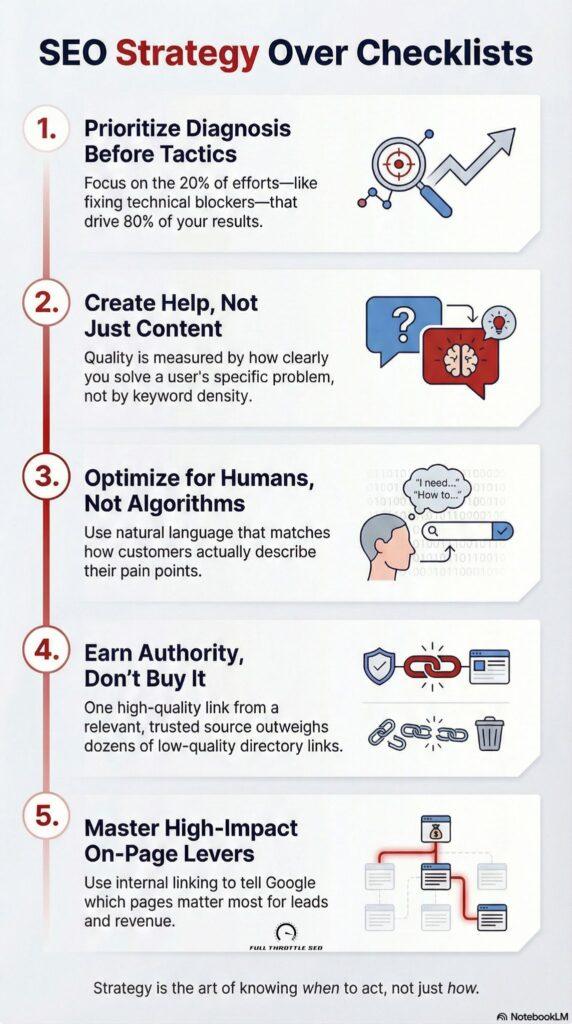
The Pareto principle applies to SEO as much as anything else: roughly 20% of your efforts will drive 80% of your results. The trick is identifying which 20%.
In most cases, the highest-impact SEO work falls into these categories:
- Fixing technical blockers. If Google can’t properly crawl and index your site, nothing else matters. Broken pages, crawl errors, noindex tags in the wrong place – these are silent killers.
- Improving key service and product pages. Your most important pages deserve the most attention. If the page that’s supposed to convert visitors is thin, unclear, or poorly structured, no amount of traffic will fix that.
- Internal linking. Connecting your pages with relevant internal links helps Google understand your site structure and distributes authority where it needs to go. Most sites underuse this completely.
- Content refreshes. Updating existing pages that are close to ranking – but not quite – is usually faster and more effective than creating new content from scratch.
- Building authority through earned backlinks. At some point, content and structure alone aren’t enough. If competitors consistently outrank you, it’s often because they have stronger authority signals. One high-quality, relevant backlink – from a local publication, industry site, or trusted partner – can outweigh dozens of low-quality links. The focus should be on earning links, not manufacturing them.
If you only do 5 things, do these:
- Fix any indexing or crawl issues blocking key pages
- Rewrite your most important service or product page with clear intent-matching content
- Add internal links from related pages to your highest-priority pages
- Identify and refresh any pages sitting on page 2 of Google – they’re close, and a targeted update can push them over
- Build a small number of high-quality, relevant backlinks to your most important pages
The Most Effective SEO Tactic (It Depends)
Ask ten SEO professionals what the most effective SEO tactic is, and you’ll get ten different answers. The honest answer: it depends entirely on where you’re starting from.
These patterns can point you in the right direction – but they’re not diagnoses on their own.
Not ranking at all?
Sometimes it’s a technical or indexing issue. But more often, it’s a mismatch between what you’re targeting and what your site is positioned to rank for.
Newer or local businesses, in particular, tend to aim for broad, highly competitive keywords they’re not going to win yet. In those cases, the fix isn’t just technical – it’s refining your keyword strategy and improving how well your content matches search intent.
Getting impressions but no clicks?
Your titles and meta descriptions likely need work. People are seeing you – they’re just not choosing you. This is a positioning problem, not a visibility problem.
Getting traffic but no leads?
There’s usually a disconnect between the content and the reader.
It could be UX. It could be clarity. But often, the page simply isn’t speaking to the visitor’s actual pain point, goal, or desired outcome – so they leave without taking action.
Competitors consistently outranking you?
Authority becomes the limiting factor. At a certain point, content and structure aren’t enough – you need stronger trust signals through high-quality, relevant backlinks and brand credibility.
The key takeaway: these are directional signals, not definitive answers.
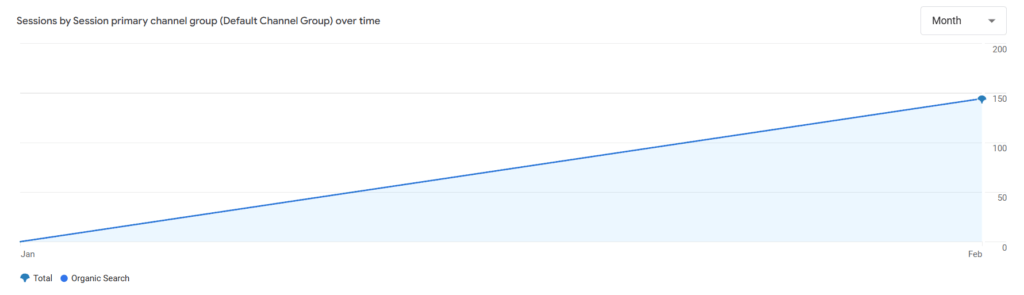
Real SEO strategy starts with diagnosis – looking at your data, your site, your competitors, and identifying what’s actually holding you back.
Because without that context, even the “right” tactic can be the wrong move.
Diagnosis before tactics. Always.
Strategic White-Hat SEO Techniques That Still Work
Content That Actually Helps (Not Just Ranks)
Good content answers a specific question or solves a specific problem – clearly, without making the reader work for it. That’s it. The length, the keyword density, the format: all secondary.
This is where things break down for a lot of businesses. They create content that looks like SEO – it has keywords, it has headers, it’s technically “about” the right topic – but it doesn’t actually help anyone.
Example of bad content: A plumbing company publishes a 200-word “blog post” titled “Plumber in Denver” that lists their services in vague terms and ends with a phone number. It targets a keyword but provides zero value.
Example of better content: That same company writes a thorough guide on what to do when a pipe bursts – with actionable steps, when to call a professional, and what to expect from the repair process. It naturally includes relevant keywords, earns trust, and converts better.
What “Trust” Actually Looks Like on Your Site
Google talks a lot about expertise and trust, but in practice, it comes down to a few very real signals:
- Clear authorship. A real person behind the content, not just a brand name.
- Real examples or firsthand insight. Not just reworded information from other sites.
- Updated content. Pages that reflect current information, not something written three years ago and left to decay.
- Basic credibility signals. A legitimate business presence, clear contact information, and consistency across your site.
Your aim shouldn’t be adding more content to the website to simply have more content. Instead, be strategic and thoughtful about making your content more believable, relatable, and unique. Provide value and insights that establish you as a trustworthy, authoritative expert in your field.
If your site looks/sounds generic, it’s treated like it’s generic – no matter how well it’s “optimized.”
Keyword Research and Natural Usage
Keyword research is about understanding how your audience describes their problems – and making sure your pages match that language. It’s not about stuffing a phrase into every other sentence (keyword stuffing is soooo 1999).
Start with the terms your customers actually use, not industry jargon. A homeowner doesn’t search for “HVAC maintenance services” – they search for “why is my AC not cooling.” That difference matters.
Use keywords to guide your content structure. Include them in titles, headings, and naturally throughout the body – but write for humans first. Google is smart enough to understand context. Keyword stuffing is a red flag, not a strategy.
On-Page Optimization Basics
On-page SEO is about making each page as clear as possible – for both users and search engines.
- Title tags: Your most important on-page signal. Include the primary keyword and make it compelling enough to earn a click.
- Meta descriptions: Don’t skip these. They don’t directly affect rankings, but a well-written meta description improves click-through rate – which does.
- Headings (H1, H2, H3): Use them to structure your content logically. One H1 per page. Subheadings should reflect what each section covers.
- Internal linking: This is one of the most underused – and highest-impact – SEO levers.
Internal links don’t just help users navigate your site. They tell Google which pages matter most.
Most sites treat all pages equally. They’re not.
Your most important pages – the ones that drive leads or revenue – should receive the most internal links from related content.
Example: If you have multiple blog posts related to “AC repair,” those posts should consistently link back to your main AC repair service page. That reinforces its importance and helps it rank higher.
UX and Technical SEO (Simplified)
You don’t need to be a developer to understand what technical SEO is trying to accomplish: make the site fast, easy to navigate, and accessible on any device.
- Mobile-first: Google indexes the mobile version of your site. If it’s clunky on a phone, that’s a problem.
- Page speed: Slow sites lose visitors and rank lower. Use Google’s PageSpeed Insights to find the biggest issues.
- Clear navigation: If users can’t find what they need, they leave. High bounce rates signal poor UX – and that hurts rankings over time.
Example: A local HVAC company creating 50 identical “city pages” with only the location name swapped out. Each page is essentially the same content, repeated. This looks like SEO – but it adds no real value and often triggers duplicate content issues.
From a technical standpoint, this also means there are now 50 additional pages not ranking on the website, reducing the chances that the rest of their website ranks as well.
Schema Markup
Schema markup is structured code that helps Google better understand what your page is about. You’re not changing what users see – you’re giving search engines additional context about your content.
For local businesses, the most relevant types include LocalBusiness, FAQ, and Review schema. These can trigger rich results in Google – like star ratings or FAQ dropdowns – which improve visibility and click-through rate. You don’t need to write the code yourself; most CMS platforms and SEO plugins handle this.
White Hat Link Building
Links from other websites are still one of the strongest ranking signals in SEO. The key word is “earned.” A link from a relevant, authoritative site is worth far more than 100 links from random directories.
What good link building looks like:
- Getting coverage from local news or industry publications (digital PR)
- Writing genuinely useful guest content for relevant sites
- Forming partnerships with complementary businesses
- Creating resources that other sites naturally want to reference
What to avoid:
- Buying links from vendors (violates Google guidelines)
- Submitting to low-quality or irrelevant directories
- Link exchanges that exist purely for SEO gain
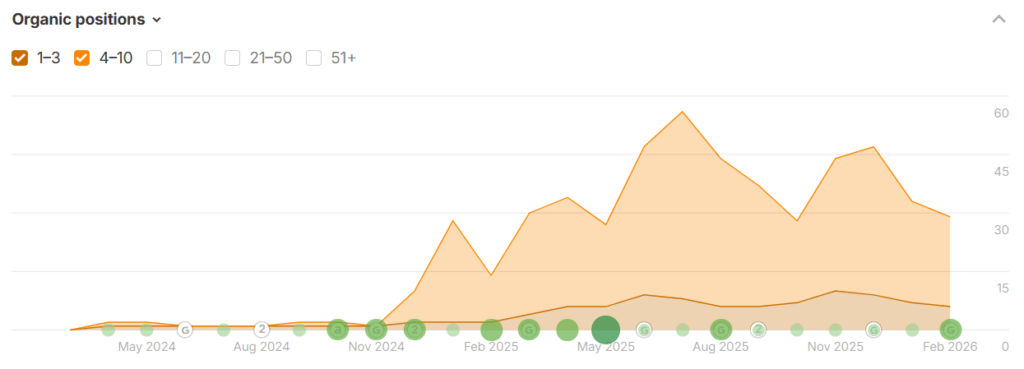
What I’ve discovered is that when combined with on-page SEO a slow, but steady building of backlinks to a website increases the Domain Rating (or Domain Authority) and contributes to the ease at which your website can rank for keywords.
Here, a steady increase in referring domains has consistently (albeit slowly) increased Domain Authority of this website.
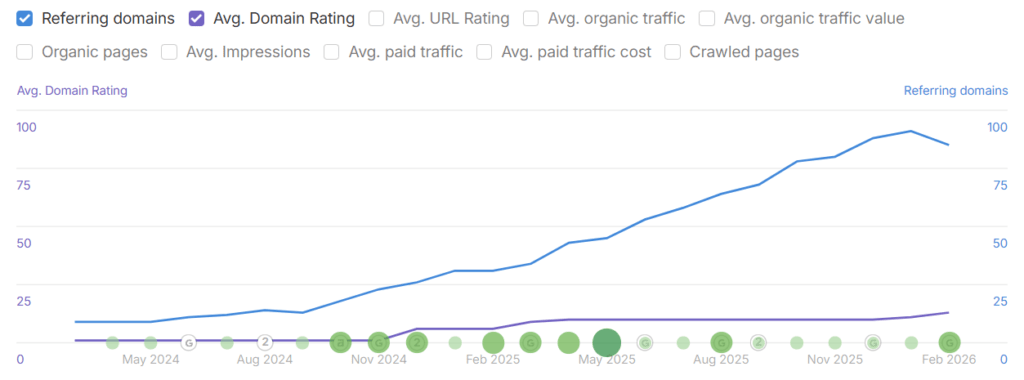
And in turn, increases the number of keywords ranking in the top 10 positions in search.
Tracking What Matters
If you’re not tracking your SEO, you’re flying blind. But equally problematic: tracking the wrong things.
The two tools you actually need: Google Search Console (free, shows impressions, clicks, rankings, and indexing issues) and Google Analytics 4 (traffic quality, user behavior, conversions).
Focus on traffic quality over raw traffic volume, conversions over page views, and visibility trends over time rather than single-point snapshots. A steady upward trend in impressions and clicks is a healthy sign. Vanity metrics – like total page views that include spam – will mislead you.
AI and White-Hat SEO
AI writing tools aren’t going away, and used strategically, they can save real time. But they’re tools, not strategy. If anything, AI has made white hat SEO and quality content marketing more important—not less.
AI didn’t change the fundamentals of SEO – it exposed who was never doing them well in the first place.
Search hasn’t moved away from content quality, clarity, and trust. It’s doubled down on it.
If your content is generic, surface-level, or interchangeable with 50 other pages, AI isn’t going to save it – it’s going to make it easier to ignore.
Businesses using AI to produce high volumes of generic content with minimal human input put their websites in jeopardy. This content might technically cover the right keywords, but it rarely reflects real expertise, original insight, or the kind of depth that earns trust – from users or from Google.
Google’s guidance on E-E-A-T is clear: it rewards content that demonstrates real expertise and genuine helpfulness, regardless of how it was produced. Mass-generated AI content that adds nothing new is still thin content.
Where AI works well: drafting outlines, speeding up research, generating first drafts that humans refine. Where it falls short: replacing the subject-matter knowledge and unique perspective that makes content actually worth reading.
Examples of White Hat SEO in Action
Sometimes abstract concepts land better with concrete examples. Here’s what strategic white-hat SEO actually looks like in practice:
- A landscaping company rewrites their “lawn care services” page to directly match what customers are searching for – including specific services, service areas, and answers to common questions. Rankings improve within weeks.
- A B2B SaaS company improves their homepage load time from 8 seconds to under 2. Bounce rate drops, session duration increases, and organic conversions improve – without a single new piece of content.
- A law firm adds internal links from their blog posts to relevant practice area pages. Those pages start ranking higher within a month, with no new links or content built.
- A home services company publishes a detailed guide on preparing your home for winter. A local news outlet references it in an article. One high-quality, relevant backlink earned naturally.
- An e-commerce brand refreshes product descriptions on their top 10 pages – improving clarity, adding relevant terms, and addressing customer questions directly. Impressions climb over the following quarter.
- A dental practice adds FAQ schema to their services pages. Their search listings start showing FAQ dropdowns, increasing visibility and click-through rate without changing their actual rankings.
FAQs About White-Hat SEO Techniques
What is a white hat SEO strategy?
The best white-hat SEO strategy is a plan for improving search visibility through ethical, sustainable practices that align with search engine guidelines. It focuses on creating genuine value for users – through relevant content, clean site structure, earned backlinks, and good user experience – rather than manipulating rankings through shortcuts. The goal is long-term, compounding growth rather than a quick bump that risks a penalty.
What is the difference between white hat SEO and black hat SEO?
White-hat SEO follows search engine guidelines and prioritizes real user value. Black-hat SEO uses manipulative tactics – keyword stuffing, purchased links, cloaked content – to game rankings. White-hat results take longer to build but are durable. Black-hat tactics risk penalties, de-indexing, and long-term damage to your domain authority.
What is gray hat SEO?
Gray hat SEO refers to tactics that aren’t explicitly against the rules but push ethical boundaries. Examples include aggressive link exchanges, private blog networks, or spinning AI content at scale. These tactics may work in the short term, but they carry real risk – Google’s guidelines evolve, and what’s tolerated today may be penalized tomorrow.
What is the 80/20 rule for SEO?
The 80/20 rule (Pareto principle) in SEO means that roughly 20% of your efforts produce about 80% of your results. In practice, that usually means: fix critical technical issues, improve your most important pages, build internal links, and refresh near-ranking content. These four moves tend to deliver the highest return, especially compared to publishing large volumes of low-impact content.
What is the most effective SEO tactic?
There’s no universal answer – it depends on where your site currently stands. Sites that aren’t ranking at all usually need technical fixes first. Sites getting impressions but no clicks need better titles and meta descriptions. Sites with traffic but poor conversions need stronger content and UX alignment. Diagnosis first, tactics second.
What are examples of white hat SEO?
Updating a service page to better match what users are actually searching for, earning a backlink through a media mention, improving page load speed, publishing a thorough how-to guide that answers a real customer question – all of these are white-hat SEO. They add genuine value, follow guidelines, and build a sustainable foundation for search visibility.
Final Takeaway
White-hat SEO doesn’t have a secret. It’s not one trick or one tool. It’s a commitment to building something real – a site that’s genuinely useful, technically sound, and worth linking to.
What separates businesses that see results from those that don’t usually comes down to this: strategy over tactics. Knowing what to fix first. Investing effort where it actually compounds. Ignoring the noise.
SEO done right is slow at first and then suddenly fast. The businesses that treat it as a long game – rather than looking for a shortcut to page one – are the ones that eventually own their category in search.
If you’re not sure where to start, an honest audit of your current site is usually the clearest path forward. It shows you exactly where the gaps are – and more importantly, which gaps are worth closing first.
But, if you don’t have the team or bandwidth to build a strategy around, and implement, the audit recommendations, investing in strategic white-hat SEO solutions is a great option.

J. “Ivy” Boyter is the founder of Full Throttle SEO, a Florida-based SEO consultancy. With nearly 15 years of digital marketing experience, she helps businesses turn search visibility into qualified leads and revenue, with a focus on ecommerce SEO, technical audits, and visibility in AI-powered search. Her approach connects SEO priorities to business goals, helping brands show up, get chosen, and deliver results.
Outside of work, Ivy competes in autocross and rallycross, wrangles kids and chickens, and writes heartfelt marriage and parenting advice.