
What is an H1 tag in SEO and how does it impact your visibility? Your H1 sets the foundation for how search engines, AI, and users interpret your page. When it’s aligned with intent, everything else performs better.
Let’s start with a simple question: When someone lands on your page… do they immediately know they’re in the right place?
Because if they don’t, your H1 is probably the problem.
And here’s the bigger issue most people miss:
Your H1 isn’t just for users anymore.
It’s one of the first things search engines and AI systems use to understand your page.
So if it’s unclear, generic, or mismatched?
You’re not just confusing people.
You’re making it harder to get found at all.
Table of Contents
What Is an H1 Tag?
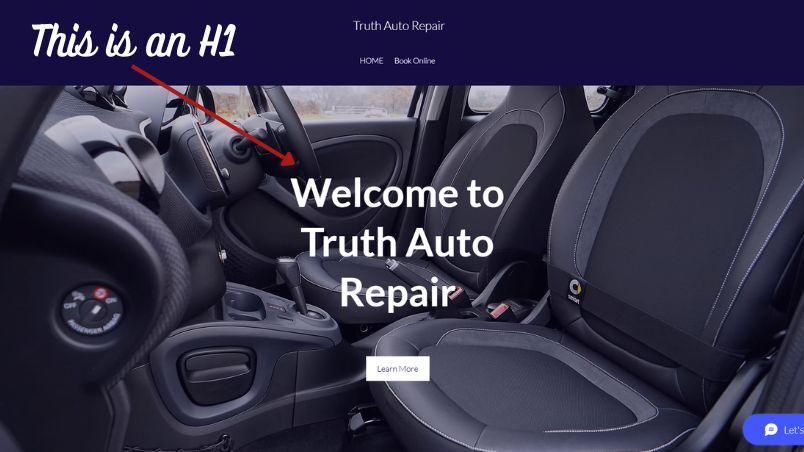
An H1 tag is the main heading on a webpage. It tells both users and search engines what the page is about.
In HTML, it looks like this:
<h1>Your main page heading</h1>
Think of it like a book or chapter title.
Before someone reads a single paragraph, that title sets expectations.
- What is this about?
- Is this what I was looking for?
- Should I keep reading?
Your H1 answers all of that instantly.
What Does an H1 Tag Look Like in Practice?

Most of the time, your H1 is simply the title of your page or blog post.
Examples:
- What Is an H1 Tag? SEO Best Practices
- How to Choose the Right CRM for Your Business
- Jacksonville Commercial HVAC Services
Clear. Direct. No guessing.
H1 Tags vs Other Heading Tags (H2–H6)

Your H1 is the main topic. Everything else supports it:
- H2s = main sections
- H3s = subsections
- H4–H6 = deeper breakdowns
If your H1 is the book title, your H2s are the chapters.
And this structure?
It’s not just for readability.
It’s how search engines and AI systems map your content.
Why H1 Tags Still Matter for SEO (and More Than You Think)
You’ve probably heard:
“H1s aren’t a ranking factor.”
Cool. That’s not the point.
The real question is:
Do H1s help search engines understand your page better?
Yes.
And that absolutely impacts performance.
Helps Search Engines Understand Your Page Topic
Search engines don’t “read” your page like a human.
They scan.
And your H1 is one of the strongest signals that says:
👉 “This is what this page is about.”
If your H1 is vague like:
- “Welcome”
- “Our Services”
- “Home”
You’re making Google guess. And when Google has to guess, you lose.
Improves User Experience and Content Clarity
Now flip it to the user side.
When someone clicks into your page, the first thing they see is your H1.
Does it clearly tell them what they’re about to read? Or do they have to scroll to figure it out?
Because if they have to think, you’ve already introduced friction.
Supports Accessibility and Structure
There’s also a structural layer here most people ignore.
Screen readers rely on heading structure.
So do crawlers.
So do AI systems.
A clean H1 → H2 → H3 structure creates a clear hierarchy.
And clarity is the game.
Why H1 Tags Matter for AI Search (AEO & GEO)
This is where most content falls behind.
Everyone’s still thinking about keywords.
But AI systems?
They care about structure and clarity first.
H1 Tags Help AI Systems Identify Page Intent
AI doesn’t read your whole page line by line.
It looks for signals.
Your H1 is one of the first.
So ask yourself:
If an AI scans your page for 2 seconds… can it clearly identify what this page answers? Or is it vague?
Structured Headings Increase Your Chances of Being Cited
AI Overviews, featured snippets, voice search…
They all pull from well-structured content.
Not the most creative content.
Not the longest content.
The clearest, most understandable.
If your H1 clearly aligns with a query like:
- “What is an H1 tag?”
- “How do H1 tags impact SEO?”
You’ve already done half the work.
How H1 Tags Support Answer Engine Optimization (AEO)
AEO is about one thing:
👉 Giving direct answers to real questions.
Your H1 sets the stage.
If your H1 matches a real query, you’re signaling:
“This page answers this question.”
And when your heading structure supports that you become easier to extract, quote, and surface.
How H1 Tags Influence Generative Engine Optimization (GEO)
Generative search pulls content from multiple sources.
But it still needs to understand:
- What each page is about
- What each section answers
If your H1 is unclear, your content is harder to use.
If it’s clear?
You’re giving AI a clean entry point.
H1 Tag vs Title Tag: What’s the Difference?
Quick clarification … because this gets mixed up a lot.
Where Each Tag Appears
- Title Tag → shows in Google search results
- H1 Tag → shows on your page
The title gets the click.
The H1 confirms they made the right choice.
Should Your H1 and Title Tag Match?
Not always, but they should align.
If your title says one thing and your H1 says something completely different you may confuse your reader and make them leave (bounce) before they ever read the content.
High bounce rates (or low engagement rates) indicate to Google that your content wasn’t valuable to visitors and can hurt your chances of ranking and being visible in the future.
H1 Tag Best Practices for SEO and AI Visibility
Now let’s get practical… and I’m going to challenge you a bit here.
Use One H1 Tag Per Page (and Why It Still Matters)
Yes, technically Google can handle multiple H1s. That doesn’t mean you should use them.
One page = one main topic.
Your H1 defines it.
Include Your Primary Keyword (Without Forcing It)
This is where I see a lot of mistakes.
There are usually two buckets:
- H1s that sound great to humans, but have zero keyword alignment
- H1s stuffed with broad keywords that don’t match intent
Neither works.
Your H1 should include your keyword… but more importantly, it should match the query behind it.
Match Search Intent, Not Just Keywords
Here’s something I do every time:
I Google the keyword.
What’s ranking?
- Guides?
- Product pages?
- Definitions?
That tells you what Google expects and your H1 (and content) should reflect that.
Keep Your H1 Clear, Not Clever
This is a big one.
Creative headlines are great for social media.
Not here.
If someone lands on your page, your H1 should immediately answer:
👉 What is this page about?
No guessing. No decoding.
Align Your H1 With Your Title Tag
These don’t have to be identical, but they should reinforce the same idea.
Think of it as continuity.
Write H1s That Answer Real Search Queries
This is where SEO meets AEO.
Your H1 should feel like something someone would actually type into Google.
Because that’s what increases visibility across:
- search results
- featured snippets
- AI summaries
Common H1 Tag Mistakes That Hurt Rankings and Visibility
Let’s make this real.
These are the things I actually see when auditing sites.
Missing H1 Tags
Yes, this still happens.
No H1 = weak signal.
Multiple H1 Tags on One Page
Now your page has multiple “main topics.”
That’s confusing—for everyone.
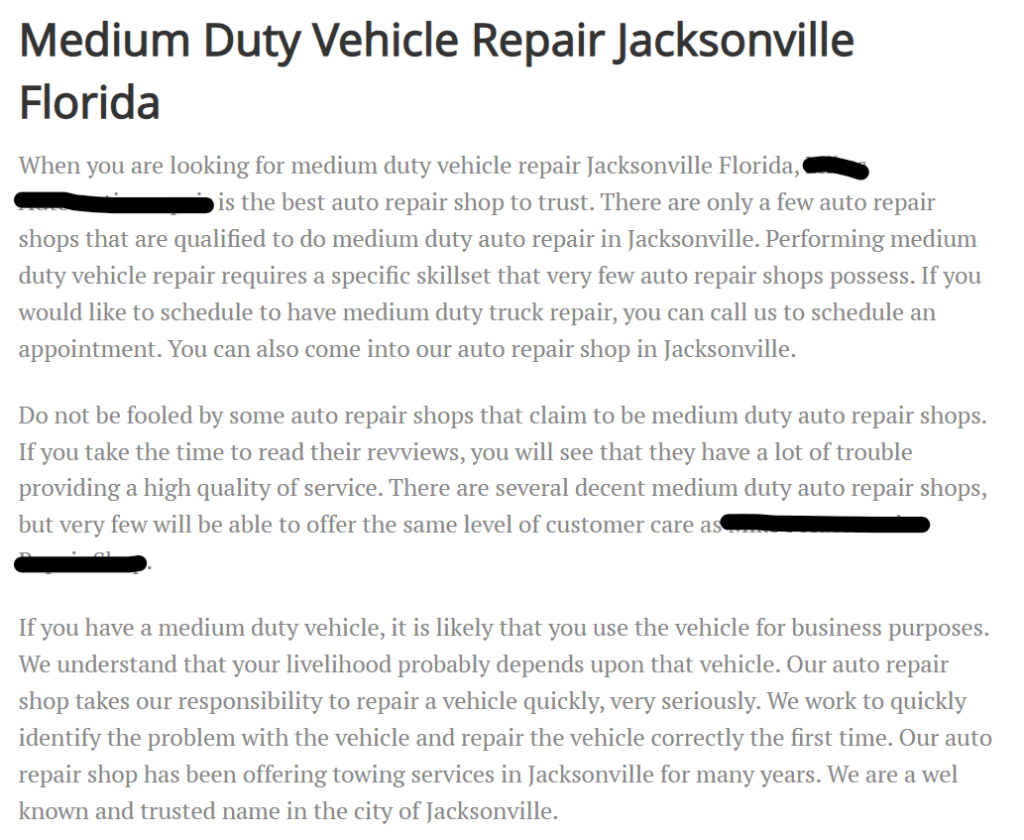
Generic or Vague Headings
“Welcome”
“Our Services”
“Blog”
These don’t help anyone.
Using Images Instead of HTML Text
If your “heading” is baked into an image…
Search engines can’t read it properly.
Does Every Page Need an H1 Tag?
If you want the page to rank?
Yes.
Every important page should have a clear H1.
How Long Should an H1 Tag Be for SEO?
There’s no strict limit.
But shorter is better.
Aim for:
👉 Clear and scannable over clever and long
What Should Your H1 Tag Be? (Real Examples)
Let’s make this practical.
Good H1 Examples
- What Is an H1 Tag? SEO Best Practices
- How H1 Tags Impact SEO and AI Visibility
- Commercial HVAC Services in Jacksonville, FL
Clear. Intent-driven. Specific.
Bad H1 Examples
- Welcome
- Services
- Marketing Solutions for Growth and Success
Too vague. No direction.
How to Check and Fix H1 Tags on Your Website
You don’t need to be technical for this.
How to Find H1 Tags
Right-click → “View Page Source” → search for <h1>
Or use an SEO extension like SEO Meta in One Click.
How to Audit H1 Tags at Scale
Use tools like:
- site audits
- crawlers
- SEO platforms
But here’s the bigger insight:
Fixing H1s usually isn’t just fixing H1s.
It often uncovers:
- mismatched SEO titles
- weak meta descriptions
- content that doesn’t match intent
And when you fix all of that together?
That’s when you start seeing movement.
The Real Role of H1 Tags in Modern Search
Let’s zoom out for a second.
Why “It’s Not a Ranking Factor” Is the Wrong Conversation
This debate misses the point.
H1s aren’t about rankings directly.
They’re about clarity.
And clarity affects everything.
Structure Is the New Optimization Layer
Most people are focused on:
- keywords
- content
But they’re ignoring structure.
And structure is how both search engines and AI interpret your content quickly.
If AI Can’t Understand Your Page, It Won’t Use It
This is where things are going.
AI doesn’t guess.
It selects.
And it selects content that’s:
- clearly structured
- easy to extract
- aligned with queries
Your H1 is the starting point.
TL;DR: H1 Tag Best Practices for SEO, AEO, and GEO
If you take nothing else from this:
- Your H1 is your page’s main signal
- It should clearly match the search query
- It should be structured for both users and AI
- One page = one clear H1
- Clarity beats cleverness every time
Check Your Website’s H1 Tags
If you’re not sure whether your H1s are helping or hurting…
That’s fixable.
I put together a simple Online Visibility Checker to help you quickly spot issues with:
- headings
- structure
- visibility signals
👉 Start there, and you’ll immediately see where things can improve.
If you read this and thought:
“Yeah… I’ve definitely got some pages like that.”
You’re not alone.
But now you know what to look for.

J. “Ivy” Boyter is the founder of Full Throttle SEO, a Florida-based SEO consultancy. With nearly 15 years of digital marketing experience, she helps businesses turn search visibility into qualified leads and revenue, with a focus on ecommerce SEO, technical audits, and visibility in AI-powered search. Her approach connects SEO priorities to business goals, helping brands show up, get chosen, and deliver results.
Outside of work, Ivy competes in autocross and rallycross, wrangles kids and chickens, and writes heartfelt marriage and parenting advice.