
Welcome to the Beginners Guide to Small Business SEO. Here you’ll get an introduction to SEO and a few steps to help you get started with SEO for your small business.
Feeling lost in the world of search engine optimization? You’re not alone. Most small business owners know they “should” be doing SEO, but the whole thing feels like trying to solve a puzzle with half the pieces missing. Here’s the truth: SEO doesn’t have to be complicated or expensive to work for your business.
This guide will walk you through everything you need to know to get started with SEO as a small business owner. We’ll keep our tips simple, actionable, and focused on what actually moves the needle for businesses like yours.
What is SEO and Why Is It Important for Small Businesses?
SEO stands for Search Engine Optimization. With the rise of AI and LLMs, the acronym has also come to mean Search Everywhere Optimization. But let’s break that down into plain English. It’s basically the practice of making your website more attractive to search engines and AI like Google, ChatGPT, and AI Overviews so they’ll show it to people who are looking for what you offer.
Think about it this way: when someone in your area searches for “best pizza near me” or “plumber in [your city],” you want your business to pop up in those results. That’s what SEO helps you do.
Here’s why SEO matters so much for small businesses:
It levels the playing field. You don’t need a million-dollar marketing budget to compete with bigger companies online. Good SEO can help your local bakery show up before a national chain when someone searches for “fresh bread near me.”
It brings you customers who are already looking for you. Unlike ads that interrupt people, SEO connects you with folks who are actively searching for your products or services. These leads have much higher purchase intent over cold calls.
It builds long-term value. While paid ads stop working the moment you stop paying, good SEO work compounds over time. The blog post you write today could still be bringing in customers years from now.
It improves brand visibility. The more you show up in search, the more likely future pages and/or blog posts can show up in search. And brand visibility is huge when it comes to ranking and conversions because if you aren’t see, you can’t convert.
What You Need to Know Before Getting Started
Can you handle SEO yourself, or do you need to hire an expert? The answer is: it depends on your goals and available time, but many small business owners can absolutely tackle the basics themselves.
You don’t need to become an SEO wizard overnight. Start with the fundamentals we’ll cover in this guide, and you’ll see improvements. As your business grows, you can always bring in professional help for more advanced strategies.
The key is understanding that SEO is a marathon, not a sprint. You won’t see dramatic changes overnight, but consistent effort over 3-12 months typically shows real results.
Does SEO Really Work for Small Businesses?
Absolutely, but here’s what “working” actually looks like for most small businesses:
You’re probably not going to rank #1 for “insurance” or “restaurants” overnight. But you can definitely rank for “car insurance agent in Jacksonville” or “Italian restaurant downtown.” These local, specific searches are often more valuable anyway because they connect you with people who are ready to take action.
Real small businesses see results like increased phone calls, more foot traffic, and higher-quality leads from their websites. One local contractor I know went from getting 2-3 website inquiries per month to 15-20, just by focusing on local SEO basics.
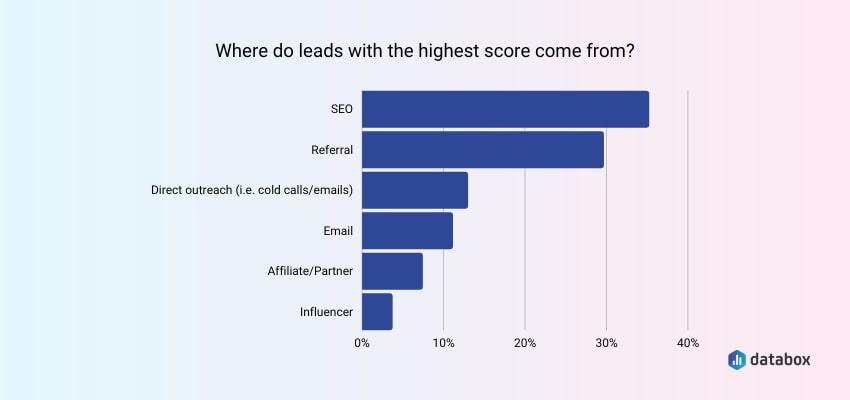
One Databox survey suggested that more than 30% of the best leads came from SEO vs other channels, with referral sources being the 2nd best.
And based on my own collected data from GA4, ecommerce revenue from organic search is still greatly outweighing AI channels.
SEO 101: The Ultimate Guide For Small Businesses
Ready to dive in? Let’s start with the foundation and build from there.
Basic SEO Terms to Know
Before we get our hands dirty, let’s make sure we’re speaking the same language. Here are the essential terms you’ll encounter:
Keywords – The words and phrases people type into search engines. For a coffee shop, keywords might include “best coffee downtown” or “espresso near me.”
SERP – Search Engine Results Page. This is what you see after you search for something on Google.
Organic results – The regular search results (not ads) that appear because they’re relevant to your search.
Local SEO – Optimizing your online presence to attract customers from local searches.
Backlinks – When other websites link to your website. Think of these as votes of confidence.
Headings – Headings (H1, H2, H3 and so on) give structure to your pages, like you’d see in a research paper or book.
Meta description – The short snippet of text that appears under your page title in search results. This is less about SEO and more about enticing users in SERPs to click your result (without being click-baity – meaning don’t describe your page inaccurately to get clicks)
Don’t worry about memorizing everything. These terms will become second nature as you start working on your SEO.
The Most Important Tools
Good news: you can make significant SEO progress with completely free tools. Here are the essentials to get started:
Google Analytics – Shows you how people find and use your website. It’s like having a conversation with your customers about what they actually do on your site.
Google Search Console – Think of this as Google’s report card for your website. It tells you which keywords are bringing people to your site and highlights any technical issues.
Google Business Profile – Critical for local businesses. This is what makes you show up in map results when people search for businesses like yours.
Bing Webmaster Tools – Similar to Google Search Console, this is Bing’s way of displaying your performance in Bing search and can help get your website mentioned in ChatGPT.
Start with these four. They’re free and will give you 80% of what you need to know about your SEO performance.
As you get more comfortable, you might explore tools like Ahrefs or SEMrush, but don’t feel pressured to invest in paid tools right away.
Keyword Research & Local SEO
Here’s where many small businesses get overwhelmed, but it doesn’t have to be complicated. Instead of trying to rank for massive, competitive keywords, focus on local and specific terms first.
Start local, then expand. Rather than trying to rank for “best auto repair shop,” focus on “best auto repair shop in [your neighborhood].” You’ll have a much better chance of ranking, and the people finding you will be more likely to actually visit.
Think like your customers. What would someone type into Google right before they’re ready to call or visit your business? A dentist might target “emergency dentist near me” or “teeth cleaning [city name].” Be careful not to use industry jargon if customers aren’t searching it, unless you’re explaining the meaning.
Use Google’s suggestions. Start typing your main keyword into Google and see what suggestions pop up. These are real searches people are making.
Check out your competitors. Look at the websites of similar businesses in your area, especially those who are showing up on the first page of SERPs. What keywords and content are they using on their homepage and service pages?
Skipping Local SEO is often a big mistake small businesses make as it’s one main ingredient I’ve used to grow small businesses. When someone searches for “plumber near me” at 2 AM with a burst pipe, they’re not shopping around – they’re ready to hire whoever shows up first in the results.
Site Structure and Planning
Think of your website like a well-organized store. Customers should be able to find what they’re looking for quickly, and everything should make logical sense.
Keep your navigation simple. If visitors can’t figure out how to find your services or contact information within 10 seconds, you’ve got a problem.
Create dedicated pages for your main services. Don’t try to cram everything onto your homepage. If you’re a landscaper, create separate pages for lawn care, tree removal, and garden design.
Make sure your contact information is everywhere. Your phone number, address, and hours should be easy to find on every page (preferably in the footer).
Think mobile-first. More than half of your visitors are probably using their phones. Make sure your site looks good and works well on small screens.
Make conversions easy. Most times I tell my clients to add their main CTA (call to action) button in a sticky header that scrolls with their website visitor.
Your website structure should tell a clear story about who you are, what you do, and how people can work with you.
Content is King
You’ve probably heard this phrase before, and it’s true. But what does it actually mean for a small business?
Content isn’t just blog posts (though those can be great). It’s every word on your website, from your homepage description to your service pages to your About Us section.
Write for humans first, search engines second. Google has gotten really good at recognizing when content is genuinely helpful versus when it’s just stuffed with keywords.
Answer the questions your customers actually ask. What do people want to know before they hire you? Create content that addresses those concerns.
Show your expertise. If you’re a financial advisor, write about common financial mistakes. If you run a pet grooming business, share tips for keeping pets calm during grooming.
Keep it fresh. Google likes websites that are regularly updated. This doesn’t mean you need to blog daily, but adding new content monthly shows you’re active and engaged.
Remember: you don’t need to write like a marketing agency. Your authentic voice and real expertise are more valuable than perfect copy. If your content engages with your audience in a meaningful way, you’ll likely see better results from everything you do.
That also means staying true to your brand voice. Some of your best customers will be from the audience that identifies with you, your values, and beliefs the most.
Optimizing SEO Tags
SEO tags might sound technical, but they’re really just ways to tell Google (and your potential customers) what each page on your website is about.
SEO Title Tags – This is the clickable headline that appears in search results. Make it descriptive and include your main keyword. Instead of “Services,” try “Professional House Cleaning Services in Jacksonville, FL | Your Company Name”.
Meta Descriptions – The short description under your title in search results. This doesn’t directly impact rankings, but a good meta description can convince more people to click on your result. Don’t worry so much about arbitrary “limits” as Google is likely to rewrite these. Instead, consider 2 or 3 sentences that accurately describe the page and possibly your UVP to get people interested in your product or service.
H1 Tags – The main headline on each page. You should have one H1 per page, and it should clearly describe what that page is about.
H2 and H3 Tags – These are subheadings that help organize your content. Use them to break up long sections and include relevant keywords naturally.
Think of these tags as your elevator pitch to both Google and potential customers. In just a few words, can you clearly communicate what this page offers and why someone should care?
And while we’re on the topic of headings, I do want to caution against using higher heading structures on irrelevant headings like “What Our Customers Say” or “Related Reading”. As these have no contextual relevance, these types of headings can remain as span, div, or just bolded text.
Backlinks
Backlinks are when other websites link to your website. Google sees these as votes of confidence. If other sites think your content is worth linking to, it’s probably high quality.
But here’s what most small businesses get wrong: they focus on quantity over quality. One link from your local newspaper or chamber of commerce is worth more than dozens of links from random, low-quality sites.
Focus on local connections. Reach out to other local businesses, community organizations, or local bloggers. Could you provide expert quotes for articles? Sponsor a local event? Partner with complementary businesses?
Create linkable content. Instead of just describing your services, create resources people actually want to share. A local real estate agent might create a “Complete Guide to Buying Your First Home in [City].”
Don’t buy links. Google can tell when links are purchased rather than earned, and it can actually hurt your rankings.
Be patient. Building quality backlinks takes time, but they’re one of the strongest ranking factors.
Start by claiming your business listings on sites like Yelp, Better Business Bureau, and industry-specific directories. These are often easy to get and provide immediate value.
Setting Up a Google Business Profile
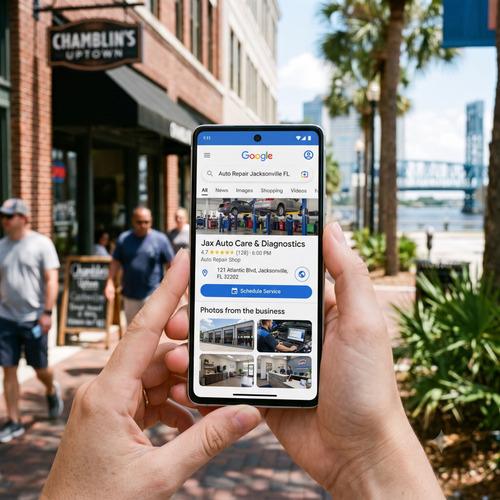
If you do nothing else after reading this guide, set up your Google Business Profile. For local businesses, this is absolutely critical.
Your Google Business Profile is what makes you show up in “map pack” results (those three businesses that appear with a map when someone searches for local services). Being in that map pack can transform your business.
Claim and verify your listing. Go to business.google.com and search for your business. If it already exists, claim it. If not, create a new listing.
Fill out everything completely. Add your hours, phone number, website, photos, services, and a compelling business description. The more complete your profile, the more likely Google is to show it. Be sure that your business details match your website to reinforce legitimacy.
Collect and respond to reviews. Reviews are crucial for local SEO. Ask happy customers to leave reviews, and always respond professionally to both positive and negative feedback.
Post regular updates. Google Business Profile allows you to post updates, photos, and special offers. Use this feature to stay active and engaged.
Use accurate categories. Choose the most specific category that describes your business. Don’t try to game the system by choosing irrelevant categories.
Take 30 minutes today to set up or optimize your Google Business Profile. It’s one of the highest-impact activities you can do for your local SEO.
More About Reviews
While we’re on the topic of Google Business Profiles and have mentioned collecting reviews, providing a bit more of a breakdown into just how important reviews are for your small business would be really helpful.
As our data is dispersed throughout the internet, we have to consider the changing landscape including factoring in what we need to show up in LLMs like ChatGPT, AI Overviews in Google, and the possibility of Google’s AI Mode.
Can you tell what AI Mode thinks is important for listing businesses when I searched “best roof repairs mandarin”?

In addition to location and rankings, reviews are a major part of why these businesses get listed in AI Mode. Google isn’t simply relying on great reviews, but the number of reviews comes into play!
Brand Messaging
While search everywhere optimization looks very similar to SEO (search engine optimization) of the past, setting your small business up for success will mean deprioritizing SEO in a sense. Not that SEO isn’t valuable, because we see time and again SEO is more relevant than ever. However, as the search landscape changes, businesses of all sizes must adapt.
And while AI can make creating websites, landing pages, and blog posts easy and inexpensive, we see how it’s also enabling businesses to produce sub-par content that doesn’t engage visitors.
Why?
It comes down to lack of EEAT.
E-E-A-T is Experience, Expertise, Authoritativeness, and Trustworthiness. And while Google may not penalize AI written content, your prospective customers just might.
This is where brand messaging needs to be strong, compelling and, frankly, not vanilla.
Make bold statements and hone in on specifics only you and your brand can share to separate yourself from the rest of the AI content generating crowd!
This is something AI and SEO can’t do for you, but will ultimately improve the overall appeal of your online work.
SEO might seem overwhelming at first, but remember: you don’t need to master everything at once. Pick one or two areas from this guide and focus on those first. As you get comfortable, gradually expand your efforts.
The most important thing? Just start with these and our slightly more technical website SEO tips. Your future customers are out there searching for exactly what you offer. With consistent effort and patience, SEO can help them find you.
GET IN TOUCH
Don’t have time for SEO?

J. “Ivy” Boyter is the founder of Full Throttle SEO, a Florida-based SEO consultancy. With nearly 15 years of digital marketing experience, she helps businesses turn search visibility into qualified leads and revenue, with a focus on ecommerce SEO, technical audits, and visibility in AI-powered search. Her approach connects SEO priorities to business goals, helping brands show up, get chosen, and deliver results.
Outside of work, Ivy competes in autocross and rallycross, wrangles kids and chickens, and writes heartfelt marriage and parenting advice.