Executive Summary: If you don’t know where to start with SEO, focus on the behind-the-scenes website setup most businesses ignore. This isn’t about just keywords or backlinks; it’s about foundational elements like your Google Business Profile, site security, and tracking tools. Get these “invisible” basics right first to build a real platform for organic traffic and growth.
SEO sounds like a never-ending to-do list, doesn’t it? People might tell you to “optimize keywords,” “build backlinks,” or “refresh your content.”
That’s all helpful, but the truth is, most business owners (and even some marketers) don’t realize how much happens behind the scenes to lay the groundwork for SEO before you ever start “ranking.”

Over the past 10+ years, we’ve worked with businesses from ecommerce to local service providers, including a South Florida surgeon, an automotive parts retailer, and even a powersports brand breaking into the U.S. market. One thing we’ve noticed is that most of them skip critical foundational steps without even realizing it.
Here’s what I want you to know: setting up these “invisible” SEO elements before you dive into campaigns can save you tons of time, effort, and frustration.
Let me walk you through the essentials your business might be missing but definitely needs if getting found in Search and AI tools is on your radar.
8 Things to Know Before You Start SEO
1. Google Business Profile: The Cornerstone for Local Success
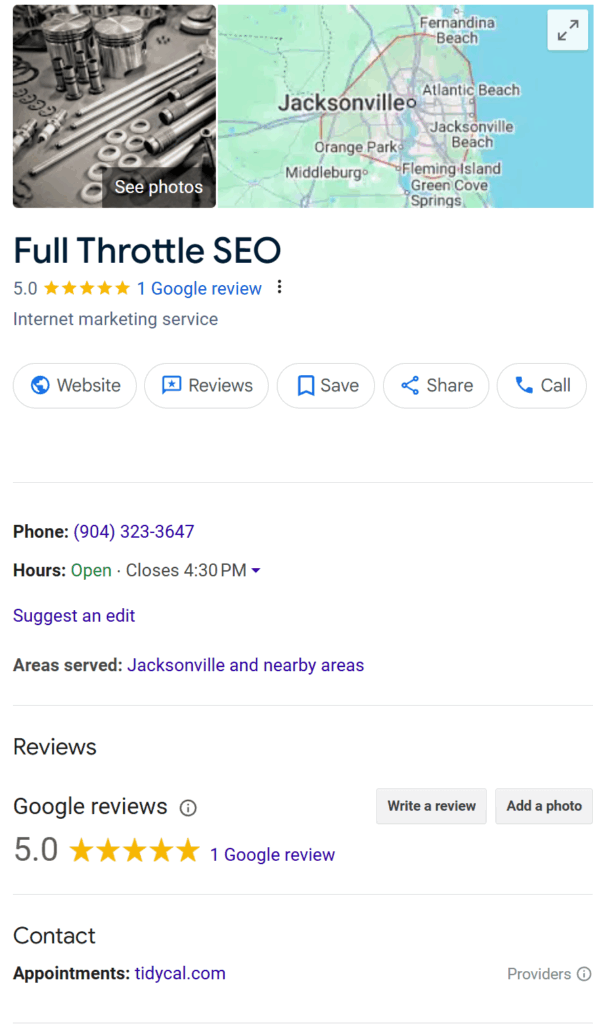
If you’re a locally based or location-driven business, optimizing your Google Business Profile (GBP) is non-negotiable. Whether you’re a surgeon, a realtor, or a small boutique, your Google Business Profile helps you get found in local search results and on Google Maps.
Why it matters for SEO:
Think of GBP as Google’s cheat sheet for your business info (like your address, hours, and customer reviews). If it’s missing or incomplete, Google has less to go on when deciding whether to recommend you for local searches. Worse, competitors with optimized GBP listings will take your spot.
Real-world insight:
We worked with a South Florida surgeon whose initial priority was local visibility. By optimizing their GBP—adding accurate NAP (name, address, phone) and targeted keywords—their organic traffic grew by over 1,000%, and nearly 80% of leads on their site converted into actual patients.
(Pro tip: This is an overlooked sales machine for local businesses. Prioritize it if you’re regional or brick-and-mortar!)

2. HTTPS Encryption: Secure Your Site (and Your Rankings)
Ever notice that most site URLs start with “https” instead of “http,” and you used to see a little padlock in the browser bar? That isn’t just for decoration. It means a website is secure.
Why it matters for SEO:
Google uses HTTPS as a ranking signal. If your site isn’t secure, you’ll not only lose rankings, but browsers like Chrome might slap your site with a “Not Secure” warning.
That’s like walking into a storefront and being greeted by a “Excuse the mess, enter at your own risk” sign. Not ideal.
What to do:
- Confirm your site has an SSL certificate installed (your web host can help).
- Make sure old “http” pages automatically redirect to their “https” versions. Surprisingly, I’ve seen businesses miss this step, which causes ranking issues.
Pro Tip: Choose a reputable web host! There’s one host in particular I will never host my own websites on because they destroyed my SEO when I was just getting started 13 years ago.

3. Schema Markup: Your SEO Secret Weapon
Schema markup, or structured data, is like adding post-it notes to your site for Google saying, “Hey, this is a product,” “This is an FAQ,” or “Here’s a review.” Although it doesn’t make your website rank better, it helps search engines understand your content more deeply and show it in richer, more engaging ways.
Why it matters for SEO:
Adding schema doesn’t directly guarantee higher rankings, but it does increase the chances of more elements from the website being displayed in search results. Think clear pricing or review ratings that catch eyeballs.
4. Sitemaps & Robots.txt: Making Google’s Job Easier
Imagine inviting Google over for dinner, but instead of welcoming them in, you lock half the doors and don’t tell them what rooms they can explore. That’s what happens when businesses don’t have proper sitemaps and robot.txt files.
Sitemap:
It’s essentially a list of all your site’s important pages so search engines know what to crawl and index. Without it, Google may not know your site exists, or might overlook key pages.
Robots.txt:
This file tells search engines what they should and should not crawl. It’s crucial for controlling how Google interacts with your site and for saving crawl budget.
5. Tracking Tools: Own Your Data
One of my biggest pet peeves? Marketing agencies that set up SEO tools but keep all the keys.
Data is one of your most valuable assets! It’s your business, so make sure you own it.
At a minimum, make sure your accounts are already set up and tracking before you start SEO campaigns. Here’s what I’d recommend:
- Google Analytics 4 (GA4): This tracks traffic and user behavior on your site.
- Google Search Console (GSC): Allows you to monitor your site’s performance in search results and fix indexing errors.
- Google Tag Manager (GTM): Great for measuring things like form submissions, button clicks, or scroll depth on key pages.
For example, with all this implemented up front, we’re able to define baseline performance metrics even before campaigns begin, emphasizing a data-driven SEO strategy. Every campaign I run starts this way because you can’t improve what you don’t measure.
6. Internal & External Links: User Experience is Key
Sometimes it’s the tiniest details that get overlooked. Most businesses don’t even think about how their links open—internal or external—but getting it wrong can frustrate users and affect SEO metrics.
Internal Links:
Internal links (links from one page on your website to another) should always open in the same tab. This keeps the user flow intact and gives them a seamless experience.
External Links:
External links (those linking from your website to a completely different website), on the other hand, should open in a new tab. You don’t want to lose a customer or user just because they clicked off to read a referenced article or source.
7. SEO Takes Time—Here’s Why It’s Worth It
Let’s get real for a minute: SEO isn’t fast.
For newer websites, it can take 8-12 months to see meaningful organic traffic gains, especially in competitive industries.
One ecommerce client whose powersports site was completely unknown in the U.S. saw virtually no results for the first few months of their campaign. By sticking to the strategy and implementing foundational SEO practices (like category optimizations and targeted schema), they eventually saw an unprecedented 794% increase in revenue from organic traffic. They had brand awareness in other countries which significantly helped their momentum in the U.S., but their website wasn’t structurally sound to make such great improvements through brand awareness alone.
If your site is brand new, the first year of SEO is often about building awareness and trust, not instant traffic and most certainly not significant revenue. The key here is patience.
And it’s not uncommon for sites older than 1 year to still take 6 to 8 months to see traction with solid SEO work.
I like to warn my clients that, due to the nature of algorithms and changing search landscape, I can’t guarantee certain results in a specific timeframe. I do, however, offer insights into when I might expect to see certain results (and that transparency, while potentially off-putting right off the bat, has been a major contributor to the trust I often get with my clients).
8. Smart Ways to Build Authority
Think building backlinks will cause you to get a penalty from Google. Or that it has to break the bank?
I’ve got great news for you.
There are ethical and low-cost (or free) strategies to boost your website’s authority that also help to drive stronger results when coupled with SEO.
Consider these smart opportunities:
- HARO, Qwoted, and Featured: These platforms (and others like them) connect journalists with expert sources. By providing valuable insights related to your expertise, you can earn high-authority and/or relevant backlinks in news articles and publications. Keep an eye out for relevant queries and respond promptly with helpful information.
- Strategic Press Releases: While many press release distribution services issue no-follow links, they are still a powerful tool for building brand awareness, trust, and authority. When picked up by news outlets and industry publications, your brand name and expertise get wider visibility, indirectly contributing to your credibility.
The key is to focus on providing value and building genuine connections. These methods can help you earn authoritative mentions and links without resorting to risky tactics.
Final Thoughts
SEO might feel like an endless uphill battle when you’re just starting out, but it doesn’t have to be overwhelming. Addressing these overlooked SEO fundamentals is often the difference between spinning your wheels and seeing real growth.
If you’re not sure where to begin or you’ve realized there are gaps in your setup, reach out for a free discovery call. We can discuss your business goals and SEO strategies that would work for your business. This is a great time to get insights into whether an SEO Audit or Monthly SEO Services makes sense for your business.
You don’t need to “do it all” to see progress. Trust me, simply starting makes all the difference.


J. “Ivy” Boyter is the founder of Full Throttle SEO, a Florida-based SEO consultancy. With nearly 15 years of digital marketing experience, she helps businesses turn search visibility into qualified leads and revenue, with a focus on ecommerce SEO, technical audits, and visibility in AI-powered search. Her approach connects SEO priorities to business goals, helping brands show up, get chosen, and deliver results.
Outside of work, Ivy competes in autocross and rallycross, wrangles kids and chickens, and writes heartfelt marriage and parenting advice.