AI isn’t coming. It’s already here. And it’s shaking up how people search, click, and buy. If you’re a business owner or in-house marketer trying to keep up, you’re probably wondering:
- What does this mean for my SEO?
- Will AI replace the need for strategy and expertise?
- Should I be doing something right now?
Let’s talk about what’s changing, what isn’t, and how to stay ahead without losing your mind (or your rankings).
Is AI Changing SEO Forever, or Is This Just Another Tech Trend?
It’s not just a trend. But it’s also not the end of SEO (I don’t care what you’ve heard).
AI can be a powerful tool for brainstorming, research, and even writing. But it’s only as good as the input you give it.
If you’re not training AI on your brand’s voice, values, and audience, it’s just regurgitating generic fluff.
That won’t build trust. It won’t connect with real people. And it won’t get results.
SEO isn’t dying. It’s evolving.
What used to be called Search Engine Optimization is now being labeled Search Everywhere Optimization.
And the people who learn how to use AI with strategy and purpose?
They’re going to win.
How Will AI Search Affect Business SEO?
Here’s what I’ve seen firsthand.
When AI Overviews pop up in search results, they can reduce clicks to your website, especially for informational searches. The kind where people are just browsing or gathering ideas.
But in most cases? That traffic wasn’t converting anyway. So leads and sales usually stay steady.
Still, there are exceptions.
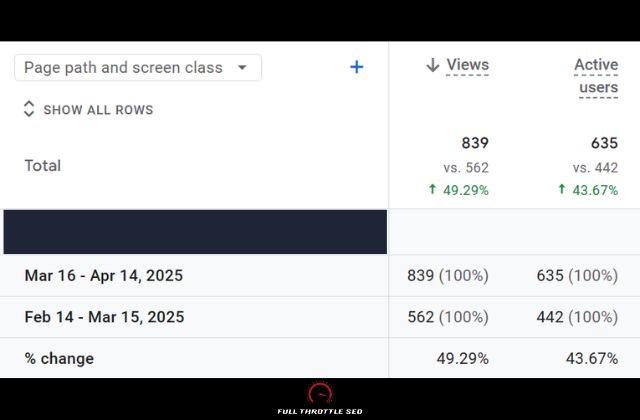
I had one client whose blog post was driving revenue because it positioned his product as the solution to a clear problem. After AI Overviews took over that query, traffic dropped — and so did sales.
The lesson?
AI Overviews were answering general informational queries and in this case, glazing over a product that would solve the problem.
Don’t rely on content that can be easily summarized by AI. Build content that connects, converts, and stands out.
We spent a lot of time testing theories (that’s the best we can do right now) about why traffic was dropping and how we could regain traffic and even getting the product mentioned in AI Overviews.
Some things we tested:
- Removing a hero image at the top of the blog post to reduce scrolling to main content.
- Adding related content in the product description and FAQs, including internal linking to the blog article.
- Adding reviews to the product section of the article.
While AI Overviews change each time they’re searched, recent updates show that he’s regaining traction on his previously high-performing article.
Will Human SEO Expertise Still Matter?
Absolutely.
I’ve been doing SEO for 13 years. That kind of experience gives you a gut instinct — the ability to sense what works, what doesn’t, and when to wait instead of panic.
AI can’t replicate that.
It can’t read between the lines.
It can’t see the full picture.
And it definitely can’t make strategic decisions based on nuance and lived experience.
Without guidance, AI just outputs safe, generic content.
No edge. No originality. No trust factor.
And your audience? They’re picking up on it.
In a recent study, over half of consumers say they’d think less of a writer who uses AI. More than 40% say they’d view a brand negatively if they found out its content was AI-generated (Search Engine Journal).
That’s a trust problem — and trust is everything in SEO.
If you’re not spending time training it and refining the output, you’ll end up disconnecting from your audience. And that’s the opposite of what SEO is supposed to do.
And let’s talk about Google’s recent stance on E-E-A-T (Experience, Expertise, Authoritativeness, and Trustworthiness).
They’ve stated you can’t just ‘add’ E-E-A-T to your web pages.
As an SEO professional, this feels counterintuitive. We’re told to build trust and showcase expertise, yet it’s not something we can simply implement?
It underscores the point: genuine human insight and strategic oversight are irreplaceable.
What Should Jacksonville Business Owners Do NOW?
Here’s what I’d tell any business owner or marketing lead who wants to stay ahead:
1. Train Your AI
Don’t just throw out prompts and hope for magic. Teach your AI tools about your business, your tone, and your goals.
For example, if you want assistance writing a service page that connects to your customers, you need to understand their pain points and address them within the content.
But you want to do this displaying your own UVP.
So, do your research on what your target audience struggles with (copy and paste questions and/or reviews) to find themes.
Share with your AI tool what your competitors are doing to address these pain points.
Have your AI tool ask you clarifying questions to understand your offer, UVP, etc to help you differentiate yourself from your competitors.
Then let it spit out some ideas for your service page. Ask for an outline or give it a page outline so that it’s comprehensive and effective.
2. Build Trust-Driven Content
Let your expertise shine. Share unique insights, personal stories, and real solutions. Show people why they should choose you.
I utilize AI to start my content in very similar ways that I suggested above. But I don’t simply copy/paste the output.
I go back through the content, edit things in my own words, add additional supporting content, and when possible, add unique images to display my expertise and experience, just like I did above with my client’s blog article conversion issue.
3. Stick to Strategy
Not every algorithm update deserves a knee-jerk reaction. Let your long-term plan guide you.
I’ve been in digital marketing for more than 10 years and I’ve seen my share of algorithm updates, upsets, and fires.
While AI trends are one of the largest disruptors I think I’ve seen, core themes generally remain the same:
- Create unique, engaging, and genuinely helpful content.
- Build trust with your audience.
- Increase earned media (organic link building).
- Have a technically sound website with good crawlable structure.
I like to tell my own clients “just think of like being a good human when it comes to your online presence.”
4. Always Edit and Fact Check
AI isn’t flawless. One wrong answer can tank your credibility.
I can’t tell you the number of times I’ve had an AI tool cite a source either incorrectly or one that simply didn’t exist. Not to mention it’s fair share of some of the made up statistics it’s spit out.
Sometimes it even hallucinates things within my content about me, my services, or my experiences.
If I weren’t paying attention, I’d be telling you all about experiences I never actually had.
Your customers don’t need that and neither do you.

5. Don’t Lose the Human Touch
People buy from people. Don’t let automation erase your connection with your audience.
Need help navigating all this?
I’ve helped clients ride the waves of every major SEO shift in the past decade — and I’m still here, not panicking.
If you want guidance rooted in experience, strategy, and a whole lot of common sense, let’s talk.
GET IN TOUCH
Get Solid SEO Strategies With or Without AI

J. “Ivy” Boyter is the founder of Full Throttle SEO, a Florida-based SEO consultancy. With nearly 15 years of digital marketing experience, she helps businesses turn search visibility into qualified leads and revenue, with a focus on ecommerce SEO, technical audits, and visibility in AI-powered search. Her approach connects SEO priorities to business goals, helping brands show up, get chosen, and deliver results.
Outside of work, Ivy competes in autocross and rallycross, wrangles kids and chickens, and writes heartfelt marriage and parenting advice.