
Ecommerce SEO is the process of improving an online store’s product pages, category pages, content, technical foundation, and authority so its products can be discovered in search and turn that visibility into sales.
You could have the perfect product, a seamless checkout experience, and competitive pricing. But if your ideal customers can’t find you when they’re searching for solutions, you’re leaving serious revenue on the table.
Ecommerce SEO isn’t some abstract, long-term marketing experiment. It’s a practical strategy to help your products show up where customers are actively looking, help them understand why your store is worth choosing, and turn that visibility into actual sales.
Let’s dig into what ecommerce SEO really is, and why it matters more now than it ever has.
Contents:
What is Ecommerce SEO? (The Actual Definition)
Ecommerce SEO is the practice of optimizing an online store to improve the visibility of its products and categories across the places customers search, including Google Search, Google Shopping, AI-powered search tools, local results when relevant, and other product discovery platforms.
But that’s just the technical version. Here’s what it actually means for your business:
It’s about making sure your products get found by the right people, at the right time, when they’re actively looking to buy.
Not eventually. Not someday. When they’re ready to purchase.
Most ecommerce businesses focus their efforts on a handful of paid channels (Google Shopping, Facebook ads, Instagram, email). Those channels work. But they’re not always sustainable long-term.
Paid visibility stops the moment you stop paying. Your ads disappear. The traffic dries up. You’re constantly feeding the machine.
Organic search is different. Build it right, and it keeps working for you. A product page optimized for search doesn’t stop ranking because you stopped spending money. A category page that answers customer questions continues to draw traffic month after month.
That’s the power of ecommerce SEO.
Ecommerce SEO vs. Traditional SEO: What’s Actually Different?
Ecommerce SEO differs from traditional SEO because it has to optimize large numbers of product and category pages for both search visibility and transactions while managing challenges such as product variations, duplicate content, faceted navigation, inventory changes, reviews, and commercial search intent.
If you’re thinking, “Isn’t SEO just… SEO?” I get it. But ecommerce SEO has some specific challenges that traditional SEO, like a B2B service site or content blog, doesn’t face.
Here’s where they diverge:
Traditional SEO
- Focuses on establishing authority and expertise
- Builds ranking power through educational content and blogs
- Often has a longer buying cycle with multiple touchpoints
- Success is measured by form submissions, consultations, or inquiries
- You have control over most of your content (it’s all on your site)
Ecommerce SEO
- Focuses on product discoverability and commercial intent
- Relies heavily on product pages, category pages, and user-generated content (reviews)
- Has a more immediate transaction goal
- Success is measured by sales, revenue, and customer acquisition cost
- You’re competing against thousands of other sellers of similar products
- You’re dealing with duplicate content issues (same product, different variations)
- You need to optimize for both product searches AND informational searches that lead to purchase decisions
- Inventory changes, seasonal trends, and product availability affect strategy
The biggest difference? Ecommerce SEO isn’t just about ranking. It’s about ranking and converting. A page that ranks #1 but doesn’t communicate why someone should buy from you instead of your competitor is basically useless.
That’s why your category pages can’t just be navigation – they need to educate customers and highlight what makes your products worth choosing.
Why Ecommerce SEO Matters (Beyond “More Traffic”)
Ecommerce SEO matters because it can create an ongoing source of product discovery and customer acquisition that does not require a business to pay for every click. Strong organic visibility can reduce dependence on paid advertising, capture customers with active purchase intent, and contribute to ecommerce revenue over time.
Let’s be direct: organic search is one of the few customer acquisition channels you can actually build into a long-term business asset.
You don’t own your Facebook audience. Meta does. You don’t control your email list – if email deliverability changes tomorrow, that’s out of your hands. You don’t own your paid ads account – your cost per click could double overnight.
But your organic rankings? That’s yours to build and maintain.
Here’s why that matters:
Organic Traffic Reduces Your Dependency on Paid Ads
Many ecommerce businesses rely heavily on paid channels. Google Shopping, Facebook, TikTok Shop – they all have a role. But when paid media is responsible for a large percentage of your sales, maintaining growth often means continuing to increase ad spend.
Organic search gives you another way to acquire customers without paying for every click. SEO still requires investment. You’re investing in strategy, content, technical improvements, authority, and ongoing optimization. But that investment can continue generating visibility and sales beyond a single campaign or ad click.
That doesn’t mean SEO is “set it and forget it.” Rankings can change, competitors improve, and the search landscape continues to evolve. But building strong organic visibility can reduce how dependent your business is on paid media and create a more diversified customer acquisition strategy.
Organic Traffic Compounds Over Time
Paid ads are a treadmill. Stop running, and the growth stops.
Organic SEO is different. The ranking power you build this month supports your visibility next month. The backlinks you earn, the content you create, the trust signals you build – they all compound.
This is why year-over-year growth in organic ecommerce revenue is so dramatic when a strategy actually works. You’re not just capturing new sales. You’re capturing more sales with less effort because your foundation is stronger.
Higher Rankings = More Trust = More Conversions
Here’s a conversion metric nobody talks about enough: trust.
Showing up organically can reinforce credibility, especially when customers see your brand more than once while they’re searching and comparing options.
I’ve actually seen paid and organic visibility work together this way. One client turned off search ads because the ads weren’t directly generating leads. Surprisingly, organic performance dropped too. When the ads came back on, organic improved again.
Our suspicion? People were seeing the ads, continuing their research, then recognizing the brand when they encountered it organically.
That’s why visibility across the search results matters. Sometimes the channel that gets the click isn’t the only channel that influenced it.
SEO Can Uncover More Than Search Opportunities
SEO data can sometimes reveal opportunities that go beyond rankings.
Maybe customers are searching for a product category you don’t have. Maybe a high-traffic category isn’t converting. Or maybe people are landing on a page but aren’t finding the information they need to make a decision.
A good SEO strategy uses that data to ask more questions: What are customers looking for? What might be missing? And where are we making it harder than necessary for them to find or choose the right product?
That doesn’t make SEO the same thing as UX. But looking at search behavior, website performance, and customer intent together can uncover opportunities that might otherwise get missed.
How Ecommerce SEO Works (The Framework)
Ecommerce SEO works by identifying how customers search for products, optimizing product and category pages for those searches, ensuring search engines can crawl and understand the store, and building supporting content and authority around the products the business wants to sell.
Ecommerce SEO isn’t magic. It’s a system. And like most systems, it works better when you understand each component.
Let’s break it down into the stages that matter:
Stage 1: Keyword Research (Finding Where Customers Are Searching)
Before you optimize a single page, you need to know what your customers are actually searching for.
Ecommerce keyword research isn’t about guessing what customers search for. It uses search data, competitor research, and customer intent to identify the queries that should shape product, category, and supporting content.
What you’re looking for:
- Commercial keywords: “Best running shoes for wide feet,” “buy sustainable skincare,” “affordable wireless headphones”
- Product-specific keywords: Brand names, product names, model numbers (if applicable)
- Category keywords: Searches that might not have an exact product match yet but show buying intent
- Question-based keywords: “How do I choose a mattress?” “What’s the difference between merino and acrylic wool?”
- Comparison keywords: “Nike vs. Adidas,” “[Your brand] vs. competitor”
The keyword research phase is where you discover what people are actually looking for, not what you think they should be looking for. Competitor research is part of that too. Looking at the keywords and pages already driving visibility for your competitors can uncover search terms, categories, and content opportunities you may be missing.
A quick example: If you sell sustainable fashion, you might assume people search “sustainable clothing.” But the data, including what competitors are successfully ranking for, might reveal searches like “eco-friendly fashion,” “ethical brands,” “non-toxic materials,” or specific products like “organic cotton t-shirts.”
Why this matters: You need to build your strategy around what people are actually searching for, not industry jargon or marketing copy.
Tools to consider: Google Search Console (free), Ahrefs, Semrush, or even just scrolling to the bottom of Google search results to see autocomplete suggestions.
Stage 2: On-Page Optimization (Making Your Pages Search-Friendly)
On-page optimization for online retail shops (eCommerce) aligns product pages, category pages, titles, descriptions, headings, images, internal links, and structured data with the searches and information needs of potential customers.
Once you know what people are searching for, you need to make sure your pages clearly communicate both relevance and value.
Product Page Optimization
- Clear, benefit-driven product titles that include relevant keywords (not just product names)
- Product descriptions that explain what the product is AND why someone should buy it
- High-quality images (search engines increasingly evaluate images)
- Price, availability, and review schema (structured data that helps Google understand your products)
- User-generated content like reviews and ratings (real signals of quality)
- Clear calls to action (e.g., “Add to Cart,” “Learn More Details”)
Category Page Strategy
- A brief introduction explaining what’s in the category (not just a list of products)
- Internal links to featured or best-selling items
- Filters and navigation that make sense to customers
- Reviews or testimonials specific to category benefits
- FAQ sections answering common category-related questions
URL Structure & Technical Elements

- SEO-friendly URLs (e.g.,
/running-shoes-for-wide-feetinstead of/product-12345) - Unique meta descriptions for each page (the snippet that shows under your link in search results)
- Proper heading hierarchy (H1 for main title, H2s for sections)
- Internal linking between related products and categories
Image Optimization
- Compressed images (fast loading = better search rankings)
- Descriptive alt text (helps search engines understand images + improves accessibility)
- Proper file names (not
IMG_2847.jpg, butnike-running-shoes-blue.jpg)
Here’s the thing: optimizing for search doesn’t mean writing for robots. It means writing clear, helpful pages that also happen to be optimized for search engines.
Your product descriptions shouldn’t read like SEO keyword soup. They should read like they were written by someone who understands your customer and knows how to help them make a decision.
Stage 3: Technical SEO (Making Sure Search Engines Can Actually Find You)
Technical SEO for ecommerce ensures search engines can efficiently crawl, index, understand, and revisit the product and category pages a store wants customers to find. It includes site architecture, crawlability, indexing, page performance, mobile usability, structured data, and URL management.
You could have the best product pages on the internet, but if search engines can’t crawl your site or if your site is slow and broken, none of it matters.
Technical SEO is the foundation that makes everything else possible.
Key areas:
Site Speed
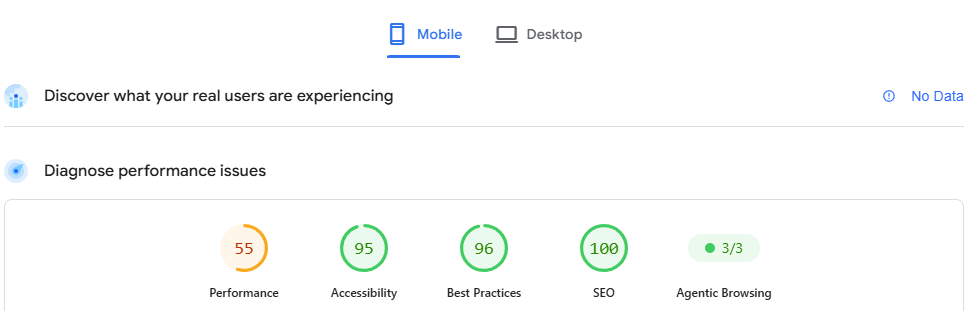
Page performance can affect both search visibility and ecommerce conversions. Google evaluates page experience and Core Web Vitals as part of its broader ranking systems, while slow-loading pages can also create friction for shoppers.
Rather than relying on a single “under three seconds” benchmark, evaluate Core Web Vitals and the actual customer experience across important product and category templates.
- Slow sites also have higher bounce rates (customers leaving immediately)
- Tools: Google PageSpeed Insights, GTmetrix
- Quick wins: Compress images, enable caching, minimize unnecessary scripts
I break down the relationship between page speed and ecommerce SEO in more detail here.
Mobile Optimization
- Over 50% of ecommerce traffic is mobile
- Google indexes mobile-first now (your mobile site is what gets ranked)
- If your mobile experience is bad, you’re invisible on mobile search
- This isn’t optional
Crawlability & Indexing
- Search engines need to be able to access your pages
- Broken internal links, blocked resources, or faulty robots.txt files create problems
- Check Google Search Console for crawl errors and indexing issues
- Make sure your category and product pages are actually being indexed
- This is code that tells search engines exactly what your product is
- Includes: product name, price, availability, reviews, ratings
- Helps search engines (and AI tools) understand your products better
- Can improve how your results display in search (with star ratings, prices, etc.)
SSL Certificate (HTTPS)
- Honestly, if your ecommerce site isn’t HTTPS by now, that’s a bigger problem than SEO
- Every page should be secure
The practical reality: You don’t need to understand all the technical details. But you need to work with someone who does—either an in-house developer, an agency, or an SEO specialist who understands technical foundations.
For a deeper look at the technical and structural pieces, use this ecommerce SEO checklist.
Stage 4: Content Marketing (Building Authority Beyond Product Pages)
Ecommerce content marketing supports product and category visibility by answering customer questions, targeting informational and comparison searches, building topical relevance, and creating internal pathways to commercial pages.
Product pages and category pages can’t do all the work. Supporting content can reach customers earlier in the decision process and help move them toward the products and categories that solve their needs.
- Answering customer questions before they reach a product page
- Building authority and trust in your category
- Creating internal linking opportunities
- Capturing informational searches that lead to purchases
- Helping search engines understand your expertise
Examples of content that works for ecommerce:
- Buying guides: “How to Choose the Right Running Shoes,” “Ultimate Guide to Sustainable Fashion”
- Comparison posts: “Merino vs. Cotton: Which Material is Best?”
- Educational content: “Why SPF 50 Matters,” “Understanding Thread Count”
- Trend pieces: “2026 Skincare Trends,” “This Season’s Sustainable Fashion Movement”
- Customer stories: Real examples of how people use your products
- How-to content: “How to Care for Wool Clothing,” “5 Ways to Style a Capsule Wardrobe”
The key: This content should be genuinely helpful. Your customers should read it and think, “This brand actually gets me.” Not, “This brand is trying to sell me something.”
When done right, this content brings in traffic that’s often more qualified than paid ads because people are actively searching for solutions.
The Show Up. Get Chosen. Deliver Results. Framework for Ecommerce
Full Throttle SEO’s Show Up. Get Chosen. Deliver Results.™ framework evaluates ecommerce SEO across three business outcomes: whether customers can discover your products, whether your store gives them a reason to choose you, and whether that visibility contributes to measurable business results.
Here’s where the rubber meets the road.
Ecommerce SEO only matters if it’s actually contributing to revenue. So let’s break down what each stage means for ecommerce.
Show Up: Are Your Products Visible Where Customers Search?
This is the foundational question: Can your ideal customers actually find your products?
For ecommerce, this includes:
Traditional Google Search
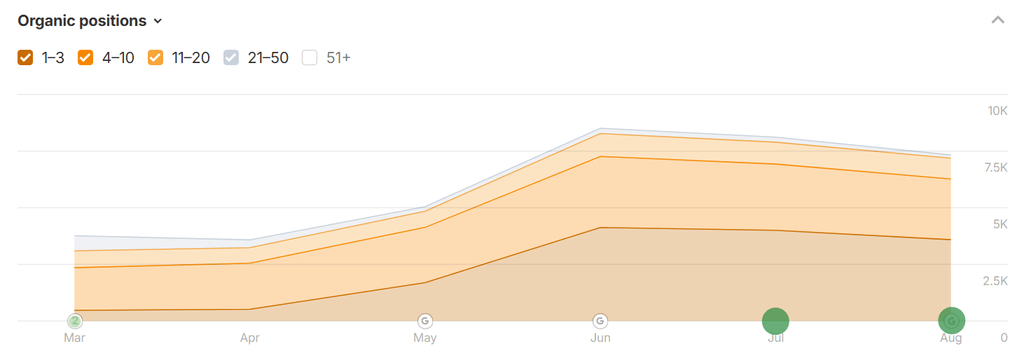
- Are you ranking for product keywords? (“Nike running shoes size 11”)
- Are you ranking for category searches? (“Best sustainable clothing brands”)
- Are you showing up in image search? (A huge driver of traffic for visual products)
AI-Powered Search
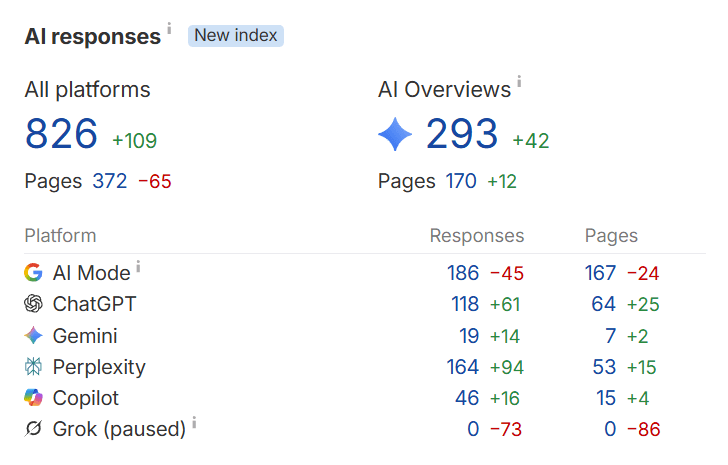
- Are your products mentioned or recommended by AI tools like ChatGPT, Claude, or Perplexity?
- Is your product data structured in ways that AI tools can easily understand and cite?
- Are you visible in AI shopping comparisons?
- Are you tracking whether AI search is actually sending traffic and customers to your site?
AI search optimization is becoming another piece of the visibility puzzle. And as platforms like GA4 begin separating AI-driven traffic into its own reporting channel, businesses have more opportunities to understand how that visibility contributes to the customer journey.
Local & Regional Visibility
- If you have physical locations, are you showing up in Google Maps and local search?
- Are your products discoverable across different regions or countries?
Third-Party Visibility
- Are you listed on major marketplaces (Amazon, Etsy, etc.)?
- Are you visible in Google Shopping?
- Are reviews of your products showing up in search results?
Questions to ask:
- Which of your product categories should be ranking in the top 3?
- Are there high-intent product searches we’re not showing up for?
- Are we visible in all the places our customers search—or just Google?
- Do our products have backlinks and third-party mentions that reinforce authority?
Get Chosen: Why Would Someone Buy From You Instead of Your Competitor?
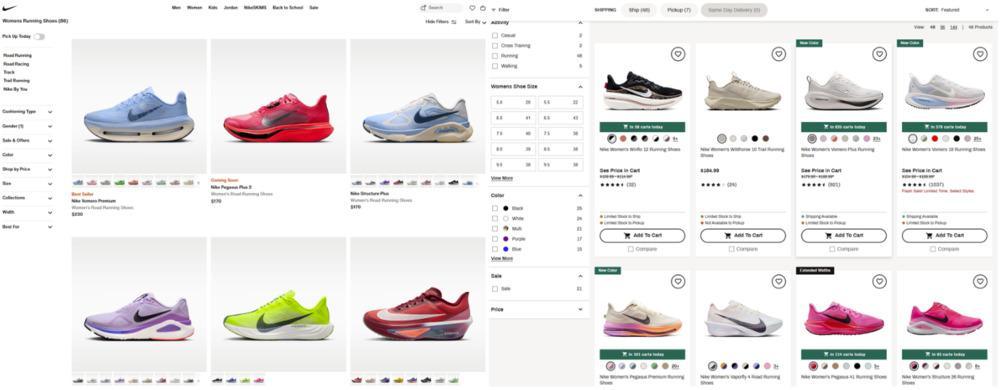
Let’s say your product pages are ranking. Great. But now comes the harder question:
Why would someone choose your store instead of Amazon or a competitor right next to you in search results?
This is where most ecommerce sites drop the ball.
Their product pages are technically optimized but emotionally empty. They read like database entries, not like something written by someone who understands their customer.
For “Get Chosen,” focus on:
Clear Differentiation
- Not “high quality” (everyone claims that)
- But: “Made from 100% deadstock fabric, eliminating waste” or “3-day artisanal production process” or “Fair trade certified with transparent sourcing”
Proof & Social Proof
- Reviews and ratings (critical for ecommerce)
- Customer photos and user-generated content
- Case studies or examples (especially for higher-value items)
- Testimonials from real customers
- Third-party certifications or mentions
Trust Signals
- Clear return and shipping policies
- About the brand (who’s behind this?)
- Quality guarantees or warranties
- Transparency about materials, production, sourcing
- Contact information and responsive customer service
Helpful Content
- FAQs that answer real customer questions
- Sizing guides and fit information
- Material care instructions
- Styling suggestions or use cases
- Comparison information (when relevant)
Clear Conversion Paths
- Obvious “Add to Cart” or “Buy Now” buttons
- Multiple CTA options (especially for higher-decision items)
- Easy access to customer service
- Minimal friction in checkout
The thing about “Get Chosen”: It’s not just about having better SEO. It’s about having better content and trust.
An AI tool recommending your product means nothing if your product page doesn’t help the customer actually want to buy. A high-ranking product page is worthless if competitors have more reviews and better pricing transparency.
Deliver Results: Is Your SEO Actually Driving Revenue?
This is where many ecommerce businesses fall short.
They see traffic increase. They see rankings improve. Then… nothing. No change in conversions. No change in revenue. No change in actual business outcomes.
That doesn’t mean SEO failed. It usually means someone wasn’t looking at the right metrics.
For ecommerce, “Deliver Results” means connecting your SEO efforts to actual sales outcomes:
Metrics That Matter
- Organic ecommerce revenue (revenue from search traffic)
- Conversion rate from organic search (% of traffic that buys)
- Average order value from organic customers (do they spend more or less than paid customers?)
- Customer lifetime value from organic (do organic customers stick around?)
- Assisted conversions (organic traffic that supports a multi-touch customer journey)
- Product-level performance (which products are driving the most revenue from organic search?)
- Category performance (which categories are your organic search winners?)
Beyond the Numbers:
- Is your organic customer acquisition cost lower than your paid channels?
- Are you attracting higher-quality customers through search (fewer returns, better retention)?
- Are branded searches increasing (sign that people are researching you before buying)?
- Is direct traffic growing (sign that organic search is influencing the customer journey)?
The hard truth: Not every page or every blog post needs to drive direct sales. Some content builds authority. Some helps you rank for other terms. Some supports customers who have already decided to buy.
But your overall SEO strategy should be tied to revenue growth. If it’s not, you’re missing the point.
Common Ecommerce SEO Challenges (And How to Actually Solve Them)
Ecommerce SEO is harder than traditional SEO in some specific ways. Let’s be real about the challenges you’re probably facing:
Challenge 1: Duplicate Content Issues
The problem: You have 50 colors of the same t-shirt. 12 sizes of the same shoe. Multiple product variations on different pages.
Search engines see all these as duplicate or near-duplicate content. That’s bad for rankings because Google doesn’t know which version to rank or might split your ranking power across versions.
The solution:
- Use canonical tags to tell Google which version is the “main” one
- Implement proper filtering and faceting so size/color variations don’t create new indexed pages
- Consolidate reviews across variations (so all sizes of the same product share review authority)
- Use structured data to clearly mark variants
Challenge 2: Thin Content on Category & Collection Pages
Thin ecommerce category pages give search engines, AI systems, and customers too little context about what the category contains, who the products are for, and how the available options differ.
Google struggles to understand what the category is actually about. Customers don’t get the information they need to make a decision. AI tools can’t summarize meaningful content from the page.
The solution:
- Add introductory content explaining the category, key attributes, or shopping considerations
- Include FAQs answering common questions (e.g., “What’s the difference between all these options?”)
- Feature best-sellers or new items with brief descriptions
- Add social proof (reviews, customer ratings) at the category level
- Link strategically to related blog content
- Highlight unique attributes (price range, brands carried, certifications, etc.)
Challenge 3: Weak Product Descriptions
Weak ecommerce product descriptions make it harder for search engines to distinguish a product page from competing or manufacturer-supplied content and give customers less information to evaluate whether the product meets their needs.
A 50-word description copied from the manufacturer, plus some specs? No personality. No benefit orientation. No customer-focused language.
And when you have hundreds or thousands of products, manually optimizing every page may not be realistic.
The solution:
- Write for customers, not search engines. Start with: “What problem does this solve?”
- Lead with benefits, then features
- Answer real questions customers have (Is it durable? Will it fit me? What’s it made from? How do I use it?)
- Use natural language – write the way people actually talk
- Highlight differentiators specific to your brand or product version
- Look for opportunities to scale optimization. For larger catalogs, templates and dynamic, rules-based content can help optimize elements across similar products without manually editing every page
The goal isn’t to generate thousands of nearly identical pages. It’s to identify what can be optimized at scale while reserving more customized content for the products and categories that matter most.
Challenge 4: Broken Links & Crawl Issues
The problem: Products go out of stock and you delete pages. Links break. Filters and product variations can create thousands of URLs. Your site structure changes. Search engines encounter errors or spend time crawling pages that don’t really need to appear in search.
On a large ecommerce site, that matters. Search engines don’t spend unlimited time crawling every URL on your website. You want to make it as easy as possible for them to find and revisit the pages that actually matter.
That’s essentially what SEOs mean when they talk about crawl budget.
The solution:
- Implement 301 redirects when you delete or move product pages
- Use 410 gone status codes when appropriate for permanently discontinued products
- Control filters, faceted navigation, and URL parameters so they don’t create endless low-value URLs for search engines to crawl
- Monitor Google Search Console for crawl and indexing issues
- Audit internal links regularly (tools like Screaming Frog help)
- Make important products and categories easy to reach through your site’s internal linking and navigation
The goal isn’t to obsess over every URL. It’s to help search engines spend more of their time on the products, categories, and content you actually want customers to find.
Challenge 5: Competing Against Marketplaces
The problem: Amazon, Etsy, Target, and other major marketplaces can dominate ecommerce search results. They have massive inventories, strong domain authority, extensive internal linking, and user-generated content at scale.
That doesn’t mean you can’t compete. It means you need to be strategic about where your site has an opportunity to provide something better or more relevant.
The solution:
- Look for gaps in the search landscape, including categories, product attributes, use cases, and specific searches competitors aren’t serving particularly well
- Strengthen high-value category and product pages where better optimization could improve existing visibility
- Build unique content marketplaces often can’t provide, such as buying guidance, product expertise, comparisons, sourcing information, or detailed use cases
- Build reviews and user-generated content that strengthen both search visibility and customer trust
- Develop a clear value proposition that gives customers a reason to buy directly from you
- Use marketplace visibility strategically, when it makes sense for the broader ecommerce strategy
Essential Ecommerce SEO Ranking Factors (What Actually Matters)
Let’s cut through the noise. Here are the factors that actually influence whether your ecommerce pages rank:
1. Relevant Keywords & Search Intent Match
Your page needs to match what people are actually searching for. If you’re trying to rank for “best sustainable fashion” but your page is just a list of products, you’re fighting an uphill battle.
Your page needs to be relevant to the search query. That’s it.
2. Content Quality & Depth
Successful ecommerce SEO depends on several interconnected factors, including search intent alignment, useful product and category content, technical accessibility, internal linking, external authority, customer trust signals, and a shopping experience that helps customers complete their purchase.
For product pages, that means complete product information, clear specifications, benefits, use cases, and ideally customer reviews.
For category pages, that means genuine helpful content – not just a navigation page.
For blog posts, that means actually good writing that helps people.
One thing I look for in ecommerce audits is whether important product and category pages actually have enough information to compete. Sometimes the opportunity isn’t creating more content. It’s recognizing that a high-value category or product already exists but isn’t giving customers or search engines enough context to understand why it deserves visibility.
3. User Experience Signals
- Is your site easy to navigate?
- Can people find what they’re looking for?
- Do pages load quickly?
- Is the mobile experience good?
- Can people easily take action (buy, add to cart, contact you)?
All of this affects ranking.
4. Reviews & User-Generated Content
For ecommerce, reviews are critical. Google loves them. Customers love them. AI tools cite them.
More reviews + higher rating average = better ranking and better conversion rates.
5. Backlinks & Domain Authority
Links from other websites are still one of Google’s strongest ranking signals.
For ecommerce, this might include:
- Press mentions
- Blogger reviews
- Industry directory listings
- Guest posts on relevant sites
- Digital PR and earned media
6. Technical Foundation
Your site needs to be:
- Fast (mobile and desktop)
- Mobile-optimized
- Crawlable and indexable
- Secure (HTTPS)
- Properly structured (with schema markup)
This is an area where ecommerce audits can uncover some surprisingly big problems. I’ve found hundreds of live product pages effectively disconnected from a site’s architecture, thousands of unnecessary internal redirects created by sitewide templates, and filters or URL variations creating far more crawl paths than the business realized.
The important part isn’t just finding technical issues. It’s determining which ones are actually getting in the way of search visibility and where a sitewide or programmatic fix can solve the problem at scale.
No amount of great content fixes a broken technical foundation.
7. Brand Signals & Trust
Google increasingly looks at whether people are searching for your brand, clicking your results, and engaging positively with your site.
This includes:
- Branded search volume
- Click-through rate from search results
- Time on site and engagement
- Return visitor rates
- Mentions across the web
8. Internal Linking Strategy
How you connect product pages, categories, subcategories, buying guides, and other content helps search engines understand your site’s structure, the relationships between your products, and which pages matter most.
I’ve audited ecommerce sites where perfectly valid product pages existed, but were barely connected to the rest of the website. If search engines have to work to discover how a product fits into your catalog, there’s a good chance customers are having to work harder too.
Internal linking isn’t just about adding more links. It’s about creating clear relationships between the pages that matter.
Ecommerce SEO Best Practices: How to Prioritize What Comes Next
Whether you’re building an ecommerce SEO strategy or looking for the next stage of organic growth, the challenge usually isn’t finding something to optimize. It’s figuring out what deserves attention first.
Here’s how I think about prioritizing the work:
Step 1: Start With the Data
Before deciding what needs to change, understand what’s already happening.
- Google Search Console: Which products and categories are gaining or losing visibility?
- Google Analytics: Which organic landing pages actually contribute to conversions and revenue?
- Competitor analysis: Where are competitors gaining visibility that you aren’t?
- Technical audit: Are technical issues limiting the visibility of important products or categories?
The goal is to identify where the biggest gaps and opportunities actually are instead of working from a generic SEO checklist.
Step 2: Understand the Search Opportunity
Keyword research shouldn’t happen in a vacuum. Connect search demand to your products, categories, business priorities, and existing performance.
Look for:
- High-value categories with untapped search demand
- Important pages already within striking distance of stronger rankings
- Keywords and categories competitors are capturing that you’re missing
- Search intent your current pages aren’t adequately serving
- Products or categories with strong revenue potential but weak organic visibility
Step 3: Prioritize the Pages That Can Make an Impact
Not every page deserves the same amount of SEO investment.
Prioritize based on a combination of search opportunity, existing visibility, revenue potential, business importance, and the effort required to improve the page.
That might mean improving a major category page, strengthening a top-selling product, or addressing a group of pages that could benefit from the same scalable optimization.
Step 4: Build Content Around Real Gaps
Supporting content should have a job to do.
That might include:
- Buying guides supporting priority categories
- Comparison content for customers evaluating their options
- Educational content addressing questions that influence purchase decisions
- Use cases, applications, or other content competitors aren’t adequately covering
Build content because you’ve identified an opportunity, not because the calendar says you need another blog post.
Step 5: Fix Technical Issues Based on Impact
Technical SEO can produce a very long list of problems. They aren’t all equally important.
Prioritize issues that affect crawling, indexing, site architecture, internal linking, page performance, structured data, or large groups of important pages. Whenever possible, look for template-level or programmatic solutions that can fix problems at scale.
Step 6: Strengthen Authority & Brand Signals
Backlinks and third-party mentions still matter, but quality and relevance should drive the strategy.
Look for opportunities through:
- Digital PR and earned media
- Relevant industry publications and directories
- Product reviews and partnerships
- Existing business relationships
- Useful resources that naturally earn mentions and links
Step 7: Measure, Learn & Reprioritize
SEO isn’t a project you complete and walk away from.
Track visibility, organic revenue, conversions, category and product performance, and emerging search opportunities. Then use that data to decide what deserves attention next.
The priority list should change as the data changes. That’s what turns SEO from a checklist into an ongoing growth strategy.
Tools That Actually Help (No Fluff)
You don’t need an expensive tech stack to do good ecommerce SEO. But these tools are worth using:
Free Tools:
- Google Search Console – See what keywords you rank for, how many impressions, average position
- Google Analytics 4 – Understand customer behavior and conversion paths
- Google PageSpeed Insights – Identify site speed issues
- Screaming Frog (free version) – Crawl your site to find broken links and technical issues
- Google Trends – See what’s trending in your category
Paid Tools (Worth It):
- Ahrefs or Semrush – Keyword research, competitor analysis, backlink tracking
- Shopify SEO apps (if you’re on Shopify) – Automated optimization suggestions
- Yoast or Rank Math – On-page optimization guidance as you write
- Hotjar or Microsoft Clarity – Understand how customers interact with your site
How to Measure Whether Ecommerce SEO Is Actually Working
Ecommerce SEO should be measured primarily by its contribution to business outcomes, including organic revenue, conversions, customer acquisition cost, and product or category performance. Traffic, rankings, impressions, and click-through rate provide important context, but they should not be treated as the end goal.
This is where many ecommerce businesses fumble the ball.
They look at traffic. “Oh, organic traffic is up 40%!” But conversion rate dropped. And revenue from organic search is down.
Here’s what actually matters:
The Primary Metrics
- Organic Ecommerce Revenue (most important)
- Total revenue generated from organic search traffic
- Track month-over-month and year-over-year
- Connect SEO performance to actual business growth
- Conversion Rate from Organic Traffic
- Not all traffic is created equal
- Is organic traffic actually turning into customers?
- Compare performance across other acquisition channels
- Customer Acquisition Cost (CAC) from Organic
- Calculate: Total SEO investment / Number of customers acquired through organic search
- Compare this to your other acquisition channels
- Look at how that cost changes as organic visibility grows
- Average Order Value from Organic Customers
- Do search customers spend more or less than your average?
- Which products and categories are they buying?
The Secondary Metrics (Context Matters)
- Organic Traffic Volume – Traffic matters, but only when you understand what that traffic is doing
- Keyword Rankings – Are you gaining visibility for searches that matter to the business?
- Click-Through Rate (CTR) from Search – Are impressions translating into visits?
- Pages with Impressions but Few Clicks – Where are you visible but not earning the click?
- AI Search Traffic & Referrals – Are tools like ChatGPT, Gemini, Perplexity, or other AI experiences beginning to send visitors to your site?
AI search adds another layer to measurement, but it doesn’t require a completely separate strategy. Search behavior is expanding, so SEO measurement needs to expand with it. Look at where customers are discovering you, how they reach the site, and what they do once they get there.
The Strategic Metrics (Long-Term Health)
- Branded Search Demand – Are more people actively searching for your company or products by name?
- Direct Traffic Growth – Is awareness from search and other channels contributing to more direct visits?
- Return Visitor Rate from Organic – Are organic visitors coming back?
- Customer Lifetime Value – Do customers acquired through organic search stick around and buy again?
The Right Dashboard Should Answer:
- Which products and categories are driving the most organic revenue?
- Where are we gaining visibility, and where are we losing it?
- How is search contributing to discovery across traditional and AI-driven experiences?
- What’s our conversion rate from organic compared to other channels?
- What should we optimize next based on the data?
If your SEO reporting doesn’t help answer those questions, you’re probably looking at metrics instead of insights.
Frequently Asked Questions About eCommerce SEO
How long before ecommerce SEO actually works?
Ecommerce SEO can begin producing measurable improvements within several months, but the timeline depends on the site’s current authority, technical condition, competition, search demand, and the scope of the SEO work. Existing ecommerce sites with established visibility may see some improvements faster than newer or highly competitive stores.
Is ecommerce SEO worth it for small businesses?
Yes. In fact, it might be more important for small businesses because you can’t afford the bloated paid budgets that larger competitors have. Organic search levels the playing field.
Which platform is best for ecommerce SEO: Shopify, WooCommerce, BigCommerce, custom?
There is no single best ecommerce platform for SEO. Shopify, WooCommerce, BigCommerce, and custom ecommerce platforms can all perform well in organic search when their technical configuration, site architecture, content, and product data are properly optimized. Pick based on your business needs, not SEO.
Isn’t most ecommerce traffic on Amazon anyway?
Not necessarily. Yes, Amazon is huge. But plenty of brands own their search visibility for their own products. Plus, Amazon charges you fees. Your own site’s margins are better. You own the customer relationship. That’s worth building.
Do I really need backlinks for ecommerce SEO?
They help, especially for competitive categories. But they’re less critical than the foundational work (good product pages, reviews, internal links). Get the basics right first, then pursue PR and backlinks.
What about AI search changing everything?
AI search changes where and how ecommerce brands can be discovered, but it does not eliminate the foundations of SEO. Clear product information, structured data, crawlable pages, useful content, brand authority, reviews, and third-party mentions can all help search systems understand a business and its products.
There is no guarantee that well-optimized content will be cited or recommended by an AI system. The goal is to make your brand and content as clear, credible, and easy to understand as possible across search experiences.
Can I do this myself or do I need an SEO Consultant?
You can start yourself with keyword research and on-page optimization. But technical SEO and link-building usually benefit from expertise. Many businesses start DIY, then bring in help to scale.
Here’s What You Actually Need to Do Right Now
Ecommerce SEO isn’t complicated in concept. It’s simple:
- Figure out what customers are searching for
- Make pages that answer those searches better than competitors
- Make sure search engines can find and understand those pages
- Track whether the visibility is actually driving revenue
- Keep improving based on data
If you do those five things consistently, your organic revenue will grow.
But here’s what most businesses miss: It’s not just about getting seen. It’s about being chosen.
You can have all the traffic in the world. If your product pages don’t explain why someone should buy from you, if your category pages don’t help customers make decisions, if your site doesn’t communicate trust and credibility, you won’t convert that traffic into revenue.
That’s why the best ecommerce SEO strategy isn’t just technical optimization. It’s building pages that are genuinely better for customers—clearer, more helpful, more trustworthy, more decisive.
When you do that:
- Search engines rank you because your pages are better
- Customers choose you because your pages help them
- AI tools recommend you because your content is clear and credible
- Revenue grows because all of the above create a flywheel
That’s ecommerce SEO that actually works.
Ready to know if your site is set up to win in search?
Let’s audit your current visibility, identify the biggest opportunities, and build a strategy to turn organic search into your most profitable customer acquisition channel.
Schedule a free consultation to discuss your ecommerce SEO strategy.

J. “Ivy” Boyter is the founder of Full Throttle SEO, a Florida-based SEO consultancy. With nearly 15 years of digital marketing experience, she helps businesses turn search visibility into qualified leads and revenue, with a focus on ecommerce SEO, technical audits, and visibility in AI-powered search. Her approach connects SEO priorities to business goals, helping brands show up, get chosen, and deliver results.
Outside of work, Ivy competes in autocross and rallycross, wrangles kids and chickens, and writes heartfelt marriage and parenting advice.