
Ecommerce structured data helps search engines and AI systems better understand your products, pricing, availability, reviews, and site structure. When implemented correctly, it improves click-through rates, enables rich results, strengthens trust signals, and makes your content easier to interpret across both traditional search and AI-driven experiences. For ecommerce brands, schema is not just a technical add-on. It is part of building a more visible, more trustworthy, and more competitive search presence, especially as search continues to expand beyond Google into AI tools and generative search.
If you’ve ever felt like your products should be performing better in search, but your listings just are not getting the clicks, structured data is often one of the missing pieces.
What is Structured Data (Schema)?
Structured data, or schema markup, is a standardized way to label the content on your site so search engines can understand it more clearly. Most commonly, this is implemented using JSON-LD. It sits behind the scenes and does not change what users see on the page.
Instead, it tells search engines exactly what they are looking at.
For example, instead of Google trying to interpret your page, you are explicitly defining:
- product name
- price and currency
- availability
- brand
- reviews and ratings
That level of clarity removes guesswork.
For ecommerce sites, that matters a lot more than people realize. You are not just dealing with one type of content. You are dealing with:
- product pages
- category pages
- brand relationships
- variations like size, color, and pricing
Without structured data, search engines are piecing that together on their own. Sometimes they get it right. Sometimes they do not.
From my perspective, schema is not about adding more code for the sake of SEO. It is about making sure your content is understood the way you intend it to be.
Why is Structured Data Important for eCommerce Sites?
Ecommerce websites are inherently more complex than most other types of sites. You are not just publishing content. You are managing:
- large product catalogs
- constantly changing inventory
- multiple brands and product relationships
- pricing updates and promotions
That complexity creates more room for misinterpretation and structured data helps reduce that.
It gives search engines a clearer picture of:
- what your products are
- how they relate to each other
- what information is most important
This impacts how your pages show up in search. And more importantly, it impacts whether users choose your listing over someone else’s.
I see this all the time.
A product page might rank well, but:
- no star ratings
- no pricing visible
- no availability shown
Right next to a competitor who has all of that.
Even if the product is better, the competitor wins the click.
For most ecommerce brands, this is where structured data stops being “just technical SEO” and starts becoming part of a larger strategy. If you’re already investing in content, technical fixes, and product optimization, schema should be working alongside that, not sitting off to the side. It’s one of the pieces that feeds into a stronger ecommerce SEO approach overall, especially for sites with large or complex product catalogs.
SEO Benefits of Implementing Schema Markup
When people talk about schema, they usually jump straight to rich results. That is part of it, but there is more going on under the surface.
Here is where schema actually impacts SEO performance.
Improved click-through rate (CTR)
- Rich results display ratings, pricing, and availability
- Listings stand out visually in search results
→ More qualified clicks without needing higher rankings
Better interpretation of your content
- Reduces ambiguity for search engines
- Helps ensure your products are understood correctly
→ Especially important for large or complex ecommerce sites
Stronger visibility across search features
- Product snippets
- image search
- video results
- shopping experiences
→ Not limited to standard organic listings
More consistent performance across large catalogs
- Helps standardize how product data is interpreted
→ Reduces inconsistencies across hundreds or thousands of pages
This is why I look at schema as a multiplier. It does not replace foundational SEO, but it absolutely enhances it.
Benefits of Structured Data for AEO and GEO
There is a lot of conversation right now around AEO and GEO. My take is simple. This is still SEO. It has just expanded as search everywhere optimization.
People are now searching in:
- Bing
- AI tools
- LLM-driven interfaces
All of those systems rely on structured, machine-readable data. Structured data supports that shift in a few important ways.
It improves machine readability
- AI systems do not “read” pages the way humans do
- They rely on structured inputs
→ Schema gives them cleaner, more reliable data
It supports entity understanding
- Defines relationships between:
- brand
- product
- content
→ Helps build a clearer model of your business
It increases trust and consistency
- Accurate, structured data is easier to validate
→ More likely to be used in AI-generated responses
One thing I have seen firsthand is that structured data is not just about what shows in search today, rather what systems can trust and use moving forward.
That is why I continue to frame this as Search Everywhere Optimization.
Because the same foundational work supports all of it.
Ecommerce Website Schema Types
If you are only implementing basic product schema, you are likely missing opportunities. A strong ecommerce schema strategy goes beyond just the minimum.
Foundational Schema (Non-Negotiable)
These are the core schema types every ecommerce site should have.
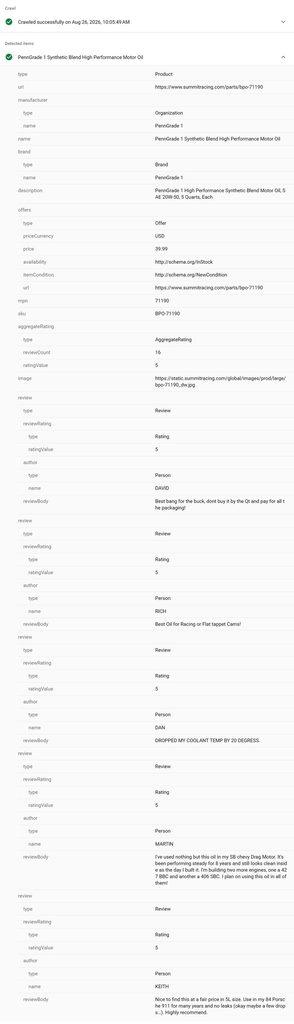
Product + Offer + Review (treated together)
- product name, description, images
- SKU and brand
- price and currency
- availability
- aggregate rating and reviews
These should not be treated separately.
They work together to power:
→ pricing visibility
→ star ratings
→ trust signals in search
A common issue I see is missing review data.
I have worked with businesses that chose not to include reviews because:
- products go out of stock frequently
- they don’t want to manage them
- or they did not see the value
The problem is that this decision impacts the entire site.
For products that remain in stock:
- no ratings means less trust
- less trust means fewer clicks
That becomes a compounding issue across large catalogs.
Structural and Entity Schema
These help search engines understand your site and brand at a higher level.
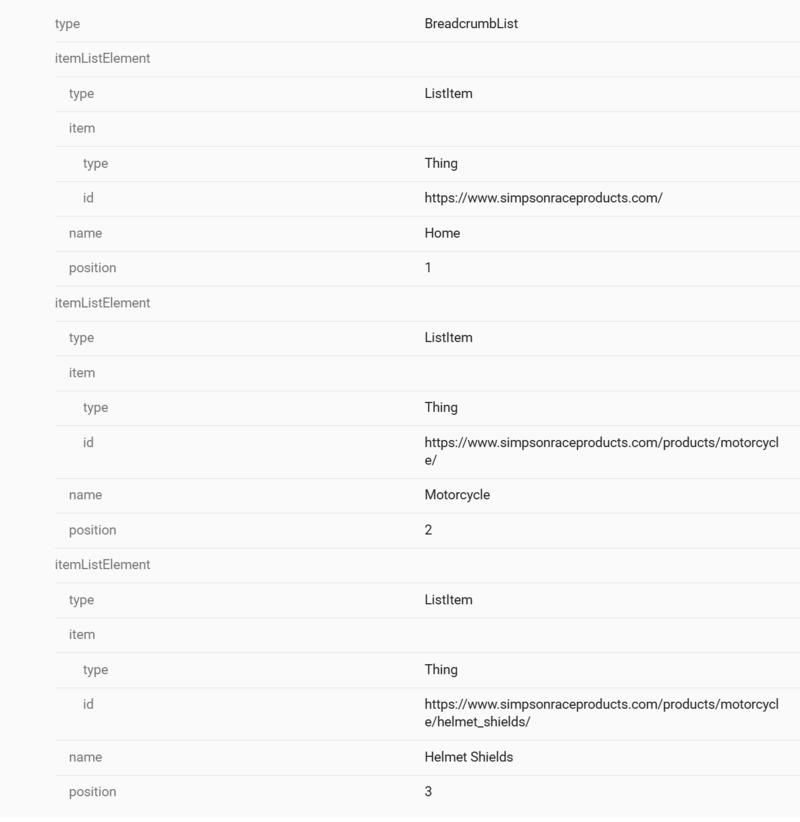
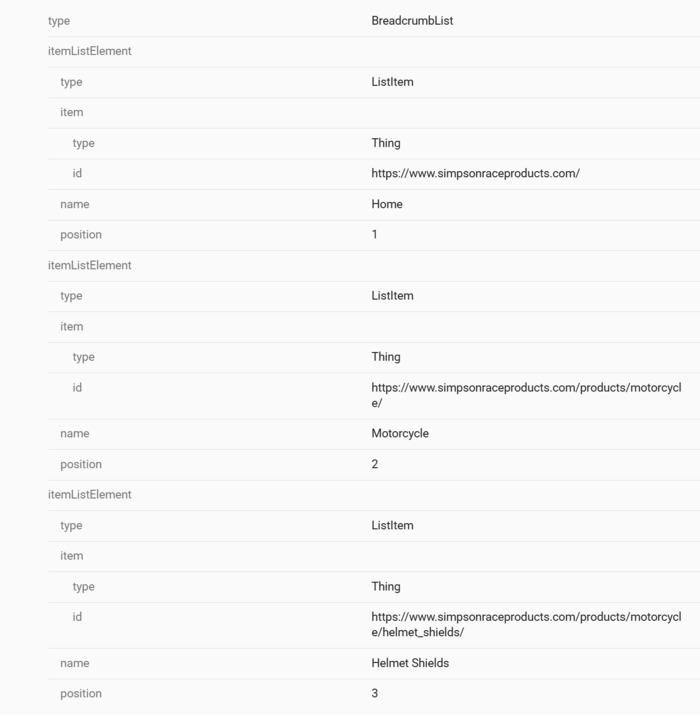
BreadcrumbList
- defines site hierarchy
- improves how URLs appear in search
→ helps both users and search engines understand navigation
 <script type="application/ld+json">
{
  "@context": "https://schema.org",
  "@type": "Organization",
  "name": "K1 RaceGear",
  "address": {
    "@type": "PostalAddress",
    "streetAddress": "5861 Edison Place",
    "addressLocality": "Carlsbad",
    "addressRegion": "CA",
    "postalCode": "Zip 92008",
    "addressCountry": "US"
  }
}
</script>
Organization
- connects brand details, logo, and identity
→ supports entity recognition across search
LocalBusiness (if applicable)
- ties your online presence to physical locations
→ supports local and AI-driven queries
These are often overlooked, but they play a key role in how your brand is understood overall.
Supporting Schema (Missed Opportunities for Many Sites)
This is where many ecommerce sites stop too early.
ItemList or CollectionPage
- used for category pages
→ helps search engines interpret product groupings
VideoObject
- supports product demos and tutorials
→ increases visibility in video search
FAQ schema (used strategically)
- even with reduced visibility in search results
→ still improves structure and machine readability
I have seen teams completely stop using FAQ schema because Google announced they’re not using it.
That is a short-sighted decision because AI tools can still use this!
If something:
- takes minimal time to implement
- does not create risk
It can still be worth doing.
Search features change. Having structured data already in place can save time later.
Advanced Schema for Ecommerce Depth
These are not always implemented, but they can create a real competitive edge.
OfferShippingDetails
- shipping costs
- delivery timelines
MerchantReturnPolicy
- return windows and conditions
PaymentMethod
- accepted payment options
WarrantyPromise
- product protection details
These help answer important buyer questions before the click.
→ Reducing friction early can improve both CTR and conversions
Implementation Considerations That Actually Matter
This is where things can go wrong quickly if not handled properly.
Structured data is not just about adding code. It is about accuracy.
Here are the non-negotiables.
- structured data must match visible page content
- pricing and availability must be kept up to date
- schema must be validated before publishing
- errors must be fixed immediately
If schema is invalid, it will not be used.
That means:
→ no rich results
→ no added visibility
→ wasted effort
I have seen this happen more than once. Teams implement schema, assume it is correct, and never test it.
If there is even a small error:
- missing field
- incorrect format
- syntax issue
The entire implementation can be ignored.
At that point, all of that time and budget was wasted.
Common Mistakes That Cost You
These are patterns I see consistently.
- relying on schema generators without expanding the data
- trusting AI output without validating it
- missing review and rating schema
- mismatched pricing or availability
- not testing schema before publishing
AI can absolutely help with schema. But I have tested this myself.
- one platform generated completely incorrect schema
- another got close but still missed important fields
If you do not know what to look for, those gaps are easy to miss. And that is where experience still matters.
Where to Go From Here
If you’ve made it this far, there’s a good chance you’re either:
- unsure if your structured data is set up correctly
- or realizing there may be gaps you haven’t looked at yet
That’s completely normal. This is one of those areas that often gets implemented once and then ignored.
If you want a quick way to sanity check where things stand, I put together an Online Visibility Checker that looks at key areas of your search presence, including things that can impact how your site shows up in search.
It’s a simple starting point, but it can help you spot:
- missed opportunities
- potential technical issues
- areas where your competitors may have an edge
Because sometimes the issue isn’t that you’re not doing enough.
It’s that the pieces you already have aren’t fully working together.

J. “Ivy” Boyter is the founder of Full Throttle SEO, a Florida-based SEO consultancy. With nearly 15 years of digital marketing experience, she helps businesses turn search visibility into qualified leads and revenue, with a focus on ecommerce SEO, technical audits, and visibility in AI-powered search. Her approach connects SEO priorities to business goals, helping brands show up, get chosen, and deliver results.
Outside of work, Ivy competes in autocross and rallycross, wrangles kids and chickens, and writes heartfelt marriage and parenting advice.