
You can pay for a beautiful new website, search your business name, and find yourself in the first result. Then the phone barely rings.
I have spoken with business owners who assumed SEO was included in their website build. I have also seen recently launched sites with a setting that discouraged search engines from indexing them. Even when a site is accessible, ranking for its own name does little to introduce it to people who have never heard of the business.
SEO consulting improves qualified leads by identifying how the right customers search, making the relevant pages visible for those searches, helping visitors decide whether the business fits, and checking with sales whether the resulting inquiries are worth pursuing. The goal is a better connection between search demand and actual business opportunities, not simply a larger traffic chart.

What makes a lead from search qualified?
A qualified lead is an inquiry from someone whose needs fit what a business offers and who has a realistic path to becoming a customer. The details differ by company: service or product fit, geography, budget, expectations, timing, and the ability to move a purchase forward may all matter.
I know the difference from my own business. A person asking for very low-cost monthly SEO with social media management included has submitted a real inquiry, but is unlikely to be a fit for my senior-level, founder-led SEO consultancy. A marketing team that already invests in search and needs strategic direction or added SEO capacity is more likely to be a good fit. A website rebuild request may lead to a useful referral, but it is not the core work I want my business known for.
That distinction matters in reporting. A form submission is a measurable lead. Whether it is qualified often becomes clear only after someone reads the request or speaks with the prospect. If sales spends its day answering calls that cannot move forward, an increase in conversions alone has not solved the problem.
Start with the searches that matter to the business
My work starts with keyword research. I identify the products, services, problems, and locations that matter to the client, then map the relevant searches to the pages best able to answer them. I prioritize money pages, especially service, product, and category pages, before filling a calendar with general blog topics.
The distinction between branded and nonbranded search is easy to miss. A business may appear first when its owner types its name into Google. Someone who has never heard of it may instead search for a particular service in their city, a product specification, or a problem they need solved. Those are the searches a growth strategy must investigate.
For a local business, the site also needs to make its service area clear. Its Google Business Profile deserves attention and ongoing maintenance alongside the website. For any site, an indexing problem can prevent important pages from becoming discoverable in the first place. These checks help establish whether the business can show up for the searches that count.
Once the right search targets are mapped, I work on the SEO titles, meta descriptions, and H1s for priority pages. These elements clarify the page’s subject and help communicate relevance in search and on the page; they do not guarantee rankings or qualified inquiries on their own. The rest of the page must fulfill the expectation they set.
Turn money pages into useful decision pages
After the targeting is clear, I revise priority pages in language customers can understand. A useful service page should make it easy to answer: Who is this for? What does the business provide? Where is it available? When is the service relevant? Why choose this provider? How does the next step work?
That does not mean forcing six labeled sections onto every page. It means removing the uncertainty a buyer would otherwise take into a sales call. Specific service details, audience fit, geographic relevance, credible proof, and an appropriate next step give visitors a way to assess the business before contacting it.
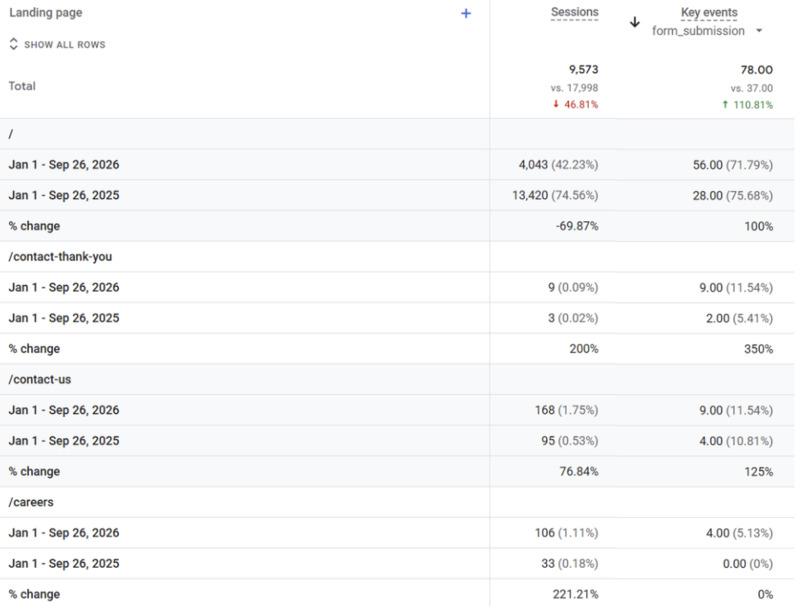
One IT services provider I work with had pages written in very formal language by offshore contractors. We rewrote pages to speak more directly to local businesses and describe the services in more natural terms. Since those changes, the site has received more leads, and the client has told me the leads are better quality. That is client feedback alongside an observed increase in leads, not a claim that the wording alone caused every result.
Clear content can also help the wrong prospect decide not to inquire. When a page says who a service suits, what it involves, and what happens next, the sales team may spend less time explaining basic fit. That is a worthwhile outcome even if raw lead volume is not the only number rising.
Listen for what keyword research cannot reveal
Keyword tools show phrases people search for. They cannot always show what someone misunderstood before searching, which objection came up on a call, or what made a customer say, “I didn’t know I needed that.”
In networking conversations, I often encounter business owners who do not realize a new website may launch without an SEO strategy, or that their Google Business Profile needs ongoing attention. Those conversations expose a gap between what a business thinks it has bought and what it needs to become discoverable. They also suggest questions its website could answer more plainly.
I am developing a more deliberate listening step in my own SEO process. I want to learn more from client and prospect conversations, especially repeated questions and moments of surprise, then test whether that insight improves pages and priorities. It would be inaccurate to present this as a mature practice I have already applied across every client. The principle is simple: search data helps us understand expressed demand; conversations can reveal needs people have not yet learned to search for.
Measure the inquiry, then ask what happened to it
In GA4, I track lead actions such as form submissions. In my Looker Studio reports, I show where leads came from. That tells us about acquisition and conversion, but it does not tell us whether the person was a good prospect or became a customer.
I ask clients what they are hearing from inquiries. If the client does not take the calls, I ask them to get feedback from the sales team: Were the requests relevant? Did callers understand the service? Was there a realistic next step? Did any of the inquiries become sales? The answers can reveal whether a page is attracting the wrong audience, leaving crucial questions unanswered, or generating opportunities worth building on.
A practical review pairs search and site data with human feedback:
| Search and site signal | Question for the team handling inquiries |
|---|---|
| A priority page gains relevant visibility | Are people asking about the service or product that page describes? |
| Form submissions or calls increase | How many requests fit our service, location, and budget? |
| One page produces many inquiries | Which questions still have to be answered on every call? |
| Visibility grows but inquiries do not | Is the page clear, credible, and easy to act on? |
This is a feedback loop, not a perfect attribution model. Someone might discover a business in search, compare options elsewhere, and return later by typing its name. A report should support decisions without pretending every customer journey fits neatly into one channel.
Show up. Get chosen. Deliver results.
This is the logic behind my Show Up. Get Chosen. Deliver Results. framework™:
- Show up for searches relevant to the people and opportunities the business wants.
- Get chosen with clear pages that answer buyer questions and establish a credible reason to act.
- Deliver results by connecting visibility and inquiries to lead fit, sales conversations, and business outcomes.
The order matters. A polished page cannot generate search leads if it is inaccessible or never appears for relevant searches. More visibility will not help much if the page speaks to the wrong audience. And counting every inquiry as a win hides what the sales team already knows.
SEO consulting brings judgment to each of those decisions. It helps a marketing team decide which pages to prioritize, which searches reflect its actual customers, what those pages need to say, and what to change when the inquiries tell a different story. If your team has search traffic but cannot tell whether it is producing the right conversations, talk with Full Throttle SEO about where the disconnect may be.
Frequently asked questions
Can SEO increase lead quality without increasing traffic?
It can. Improving visibility for searches that better match your offer and clarifying who a page is for may produce fewer irrelevant inquiries even if total traffic stays flat. Check the substance and outcome of inquiries before declaring success.
Should SEO target only people ready to buy?
No. Earlier questions can help the right people understand a problem and evaluate solutions. Prioritization depends on the business goal and resources; I generally begin with the service, product, and category pages closest to revenue, then build supporting content where it serves a real customer question.
How long does it take to see more qualified SEO leads?
There is no reliable universal timeline. A page’s current visibility, site health, competition, and the work required all affect when results can be observed. Establish a baseline, track meaningful lead actions, and collect sales feedback as changes take effect.
Can AI search contribute to qualified leads?
Potentially. Buyers may use AI tools to research and compare providers before visiting a site or contacting a business. Make the website clear about services, audience, location, and proof, while recognizing that an AI mention alone does not establish lead quality or guarantee a sale.

J. “Ivy” Boyter is the founder of Full Throttle SEO, a Florida-based SEO consultancy. With nearly 15 years of digital marketing experience, she helps businesses turn search visibility into qualified leads and revenue, with a focus on ecommerce SEO, technical audits, and visibility in AI-powered search. Her approach connects SEO priorities to business goals, helping brands show up, get chosen, and deliver results.
Outside of work, Ivy competes in autocross and rallycross, wrangles kids and chickens, and writes heartfelt marriage and parenting advice.